English Words for Kids by Topic
Start with words from a child’s everyday life — family, colors, toys, food — 5–7 words at a time, one topic for one or two weeks. Below you’ll find 12 themed lists with pronunciation in Ukrainian letters and translation, plus how to make flashcards yourself.

Roman Shkabko · 10 min read
The order of the topics is also the recommended learning sequence. If your child is 5–6 years old, first read where to start English with a preschooler.
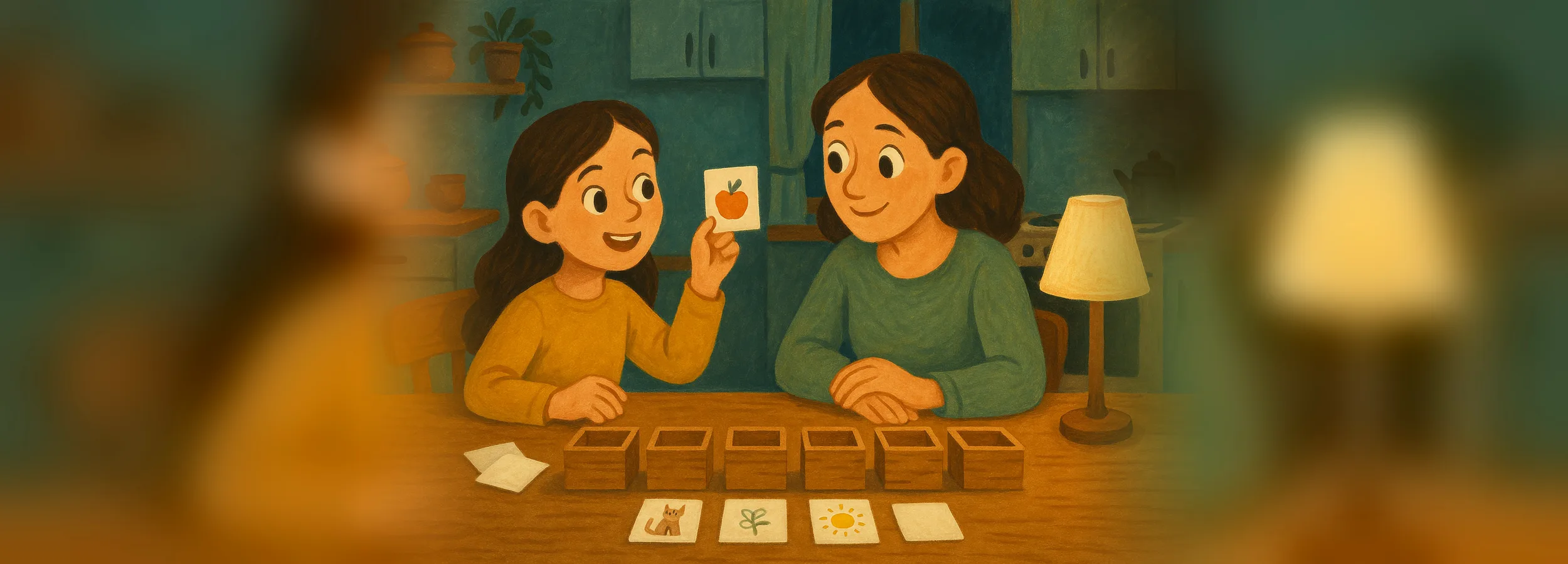
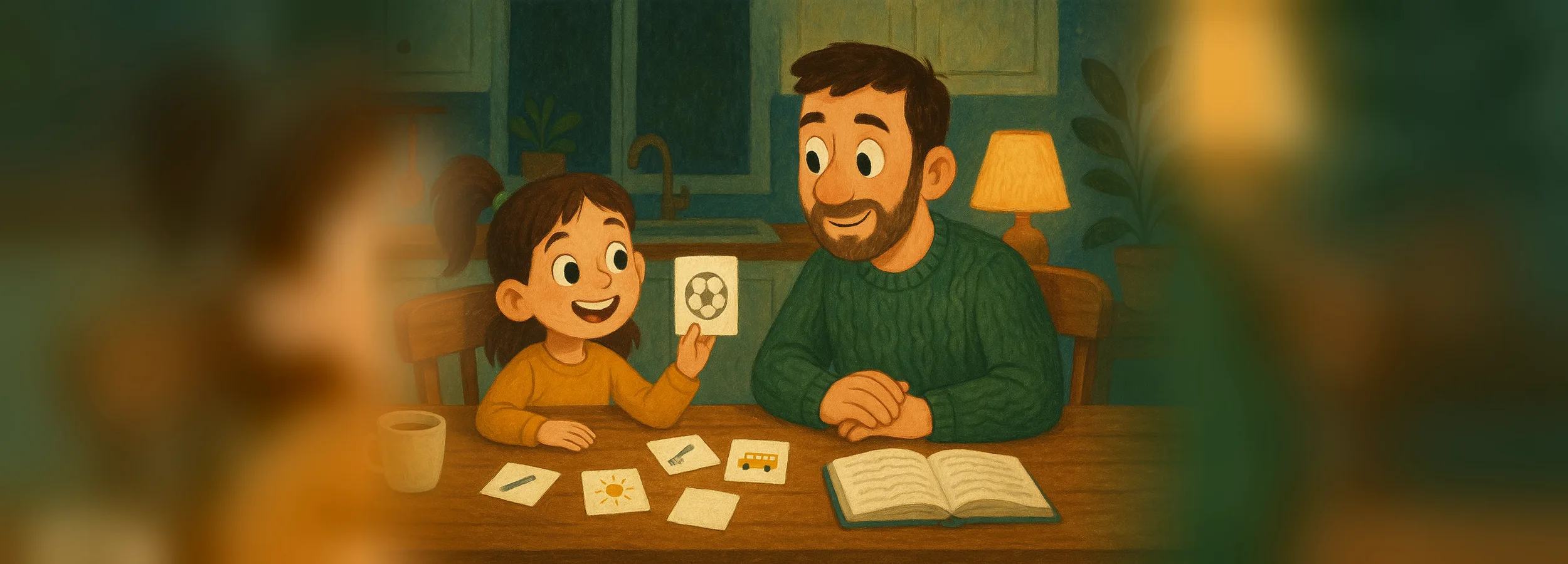
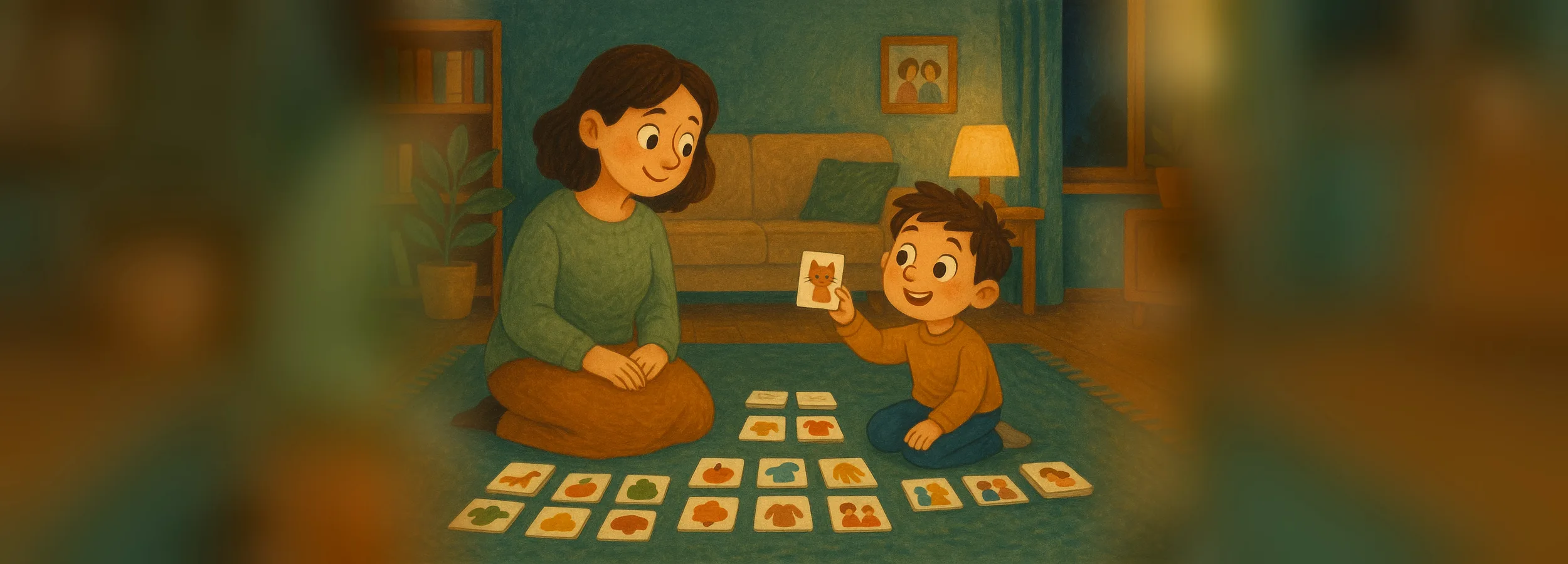
You can make the flashcards yourself: print pictures or draw them together with your child, put the English word on the front and the translation on the back. That’s half an hour of work. The harder part is something else: revisiting these cards on schedule for weeks, not just two evenings in a row. How to take that burden off your shoulders is in the Mova section below.
Family — Family
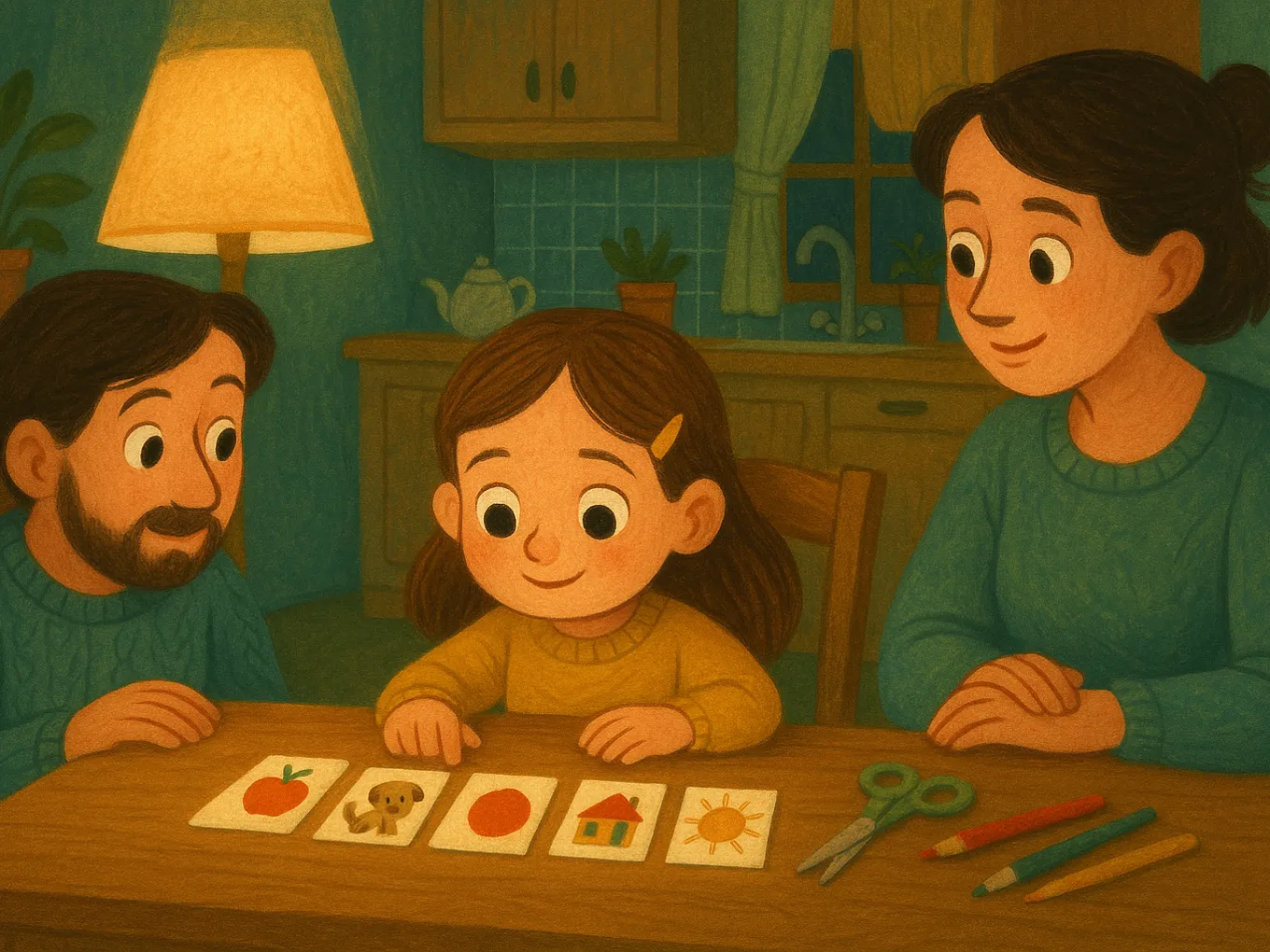
The first topic is almost always this one: these words connect to real people, so they stick the fastest.
| Word | How it sounds | Translation |
|---|---|---|
| mother / mum | [ма́зе] / [мам] | mom |
| father / dad | [фа́зе] / [дед] | dad |
| sister | [сі́сте] | sister |
| brother | [бра́зе] | brother |
| grandmother | [ґре́нмазе] | grandma |
| grandfather | [ґре́нфазе] | grandpa |
| son | [сан] | son |
| daughter | [до́те] | daughter |
| baby | [бе́йбі] | baby |
| family | [фе́мілі] | family |
Colors — Colours
Teach them through action: “Bring me the red car,” “Where is the blue one?”
| Word | How it sounds | Translation |
|---|---|---|
| red | [ред] | red |
| blue | [блу] | blue |
| green | [ґрін] | green |
| yellow | [є́лоу] | yellow |
| orange | [о́ріндж] | orange |
| pink | [пінк] | pink |
| black | [блек] | black |
| white | [вайт] | white |
| brown | [бра́ун] | brown |
| purple | [пе́пл] | purple |
Numbers 1–20 — Numbers
First 1–10, then 11–20. Count real things: steps, cars, train cars.
| Word | How it sounds | Translation |
|---|---|---|
| one | [ван] | 1 |
| two | [ту] | 2 |
| three | [срі]* | 3 |
| four | [фо] | 4 |
| five | [файв] | 5 |
| six | [сікс] | 6 |
| seven | [се́вен] | 7 |
| eight | [ейт] | 8 |
| nine | [найн] | 9 |
| ten | [тен] | 10 |
| eleven | [іле́вен] | 11 |
| twelve | [твелв] | 12 |
| thirteen | [серті́н]* | 13 |
| fourteen | [форті́н] | 14 |
| fifteen | [фіфті́н] | 15 |
| sixteen | [сіксті́н] | 16 |
| seventeen | [севенті́н] | 17 |
| eighteen | [ейті́н] | 18 |
| nineteen | [найнті́н] | 19 |
| twenty | [тве́нті] | 20 |
* The th sound ([θ]) has no exact Ukrainian equivalent: place the tip of the tongue between the teeth and blow out an “s” sound. “Sri” is only a hint — be sure to listen to the audio.
Animals — Animals
The most rewarding topic: you can show animals, make their sounds (“A cat says meow”), and look for them on a walk.
| Word | How it sounds | Translation |
|---|---|---|
| cat | [кет] | cat |
| dog | [доґ] | dog |
| cow | [ка́у] | cow |
| horse | [хос] | horse |
| pig | [піґ] | pig |
| rabbit | [ре́біт] | rabbit |
| lion | [ла́єн] | lion |
| tiger | [та́йґе] | tiger |
| bear | [беа] | bear |
| wolf | [вулф] | wolf |
| fox | [фокс] | fox |
| monkey | [ма́нкі] | monkey |
Food — Food
This one gets repeated without any “lessons”: at breakfast, name what’s on the table.
| Word | How it sounds | Translation |
|---|---|---|
| apple | [епл] | apple |
| banana | [бена́не] | banana |
| bread | [бред] | bread |
| milk | [мілк] | milk |
| water | [во́те] | water |
| juice | [джус] | juice |
| egg | [еґ] | egg |
| cheese | [чіз] | cheese |
| soup | [суп] | soup |
| rice | [райс] | rice |
| meat | [міт] | meat |
| cake | [кейк] | cake |
Body — Body
The “Touch your nose” game: the child moves, and the words stick better.
| Word | How it sounds | Translation |
|---|---|---|
| head | [хед] | head |
| hair | [хеа] | hair |
| eyes | [айз] | eyes |
| nose | [но́уз] | nose |
| mouth | [ма́ус] | mouth |
| ears | [і́ез] | ears |
| hand | [хенд] | hand, palm |
| leg | [леґ] | leg |
| foot | [фут] | foot |
| teeth | [тіс] | teeth |
Clothes — Clothes
Repeat them when your child is getting dressed: “Where are your socks?”
| Word | How it sounds | Translation |
|---|---|---|
| T-shirt | [ті́шет] | T-shirt |
| dress | [дрес] | dress |
| trousers | [тра́узез] | trousers |
| skirt | [скет] | skirt |
| jacket | [дже́кіт] | jacket |
| coat | [ко́ут] | coat |
| hat | [хет] | hat, cap |
| scarf | [скаф] | scarf |
| socks | [сокс] | socks |
| shoes | [шуз] | shoes |
House and room — House
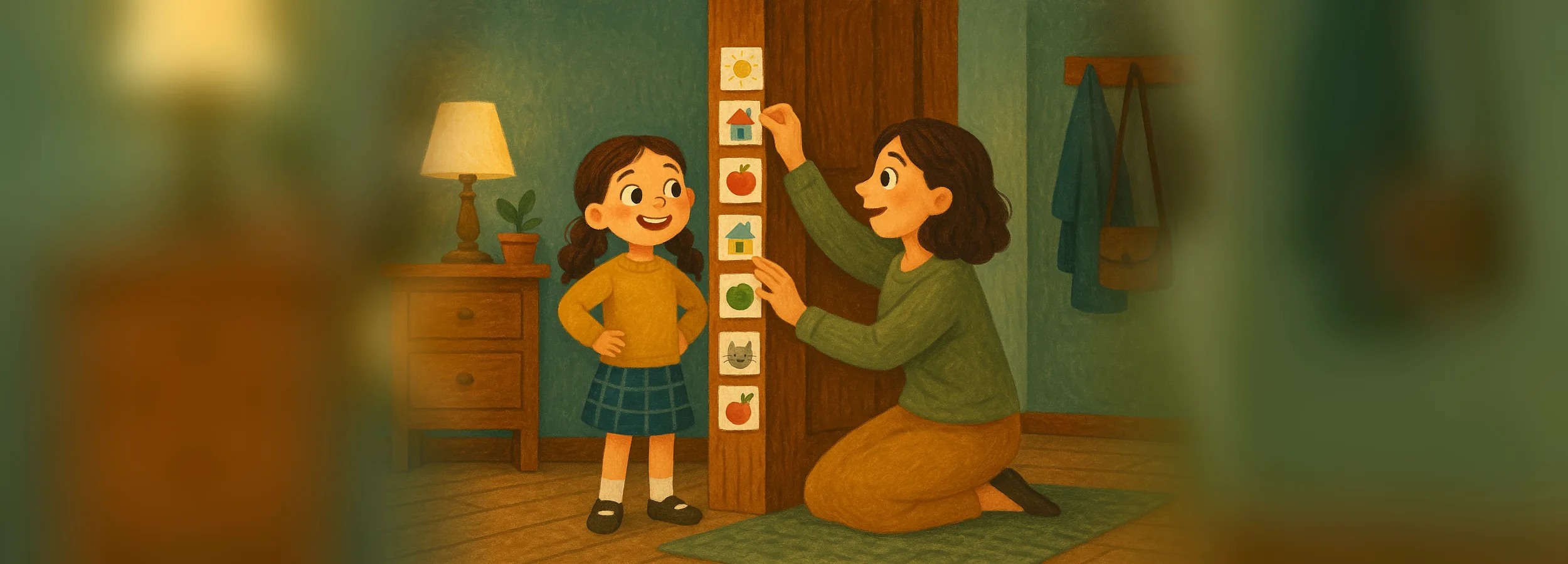
Stick the word card table on the table, door on the door. A week later, remove the stickers and check.
| Word | How it sounds | Translation |
|---|---|---|
| house | [ха́ус] | house |
| room | [рум] | room |
| kitchen | [кі́тчен] | kitchen |
| bathroom | [ба́срум] | bathroom |
| bed | [бед] | bed |
| table | [тейбл] | table |
| chair | [чеа] | chair |
| door | [до] | door |
| window | [ві́ндоу] | window |
| lamp | [лемп] | lamp |
School — School
For first graders: all of this is in the backpack.
| Word | How it sounds | Translation |
|---|---|---|
| school | [скул] | school |
| lesson | [лесн] | lesson |
| teacher | [ті́че] | teacher |
| friend | [френд] | friend |
| book | [бук] | book |
| pen | [пен] | pen |
| pencil | [пенсл] | pencil |
| bag | [беґ] | backpack, bag |
| desk | [деск] | desk |
| paper | [пе́йпе] | paper |
Actions — Verbs
Through movement: “Jump!” — and the child jumps. Then they give the commands.
| Word | How it sounds | Translation |
|---|---|---|
| go | [ґо́у] | go |
| run | [ран] | run |
| jump | [джамп] | jump |
| walk | [вок] | walk, go for a walk |
| eat | [іт] | eat |
| drink | [дрінк] | drink |
| sleep | [сліп] | sleep |
| play | [плей] | play |
| read | [рід] | read |
| write | [райт] | write |
| sing | [сінґ] | sing |
| swim | [свім] | swim |
Feelings — Feelings
This is where the first sentences begin: “I am happy.” Show feelings with your face.
| Word | How it sounds | Translation |
|---|---|---|
| happy | [хе́пі] | happy, cheerful |
| sad | [сед] | sad |
| angry | [е́нґрі] | angry |
| tired | [та́єд] | tired |
| scared | [ске́ад] | scared |
| funny | [фа́ні] | funny |
| hungry | [ха́нґрі] | hungry |
| surprised | [сепра́йзд] | surprised |
Weather and seasons — Weather
Every morning, look out the window and say what’s there: “It’s sunny!”
| Word | How it sounds | Translation |
|---|---|---|
| sun | [сан] | sun |
| rain | [рейн] | rain |
| snow | [сно́у] | snow |
| wind | [вінд] | wind |
| cloud | [кла́уд] | cloud |
| cold | [ко́улд] | cold |
| spring | [спрінґ] | spring |
| summer | [са́ме] | summer |
| autumn | [о́тем] | autumn |
| winter | [ві́нте] | winter |
How to learn these words properly
A list is just raw material. To make the words stick, follow five rules:
- 5–7 words at a time. Too much today means emptiness tomorrow.
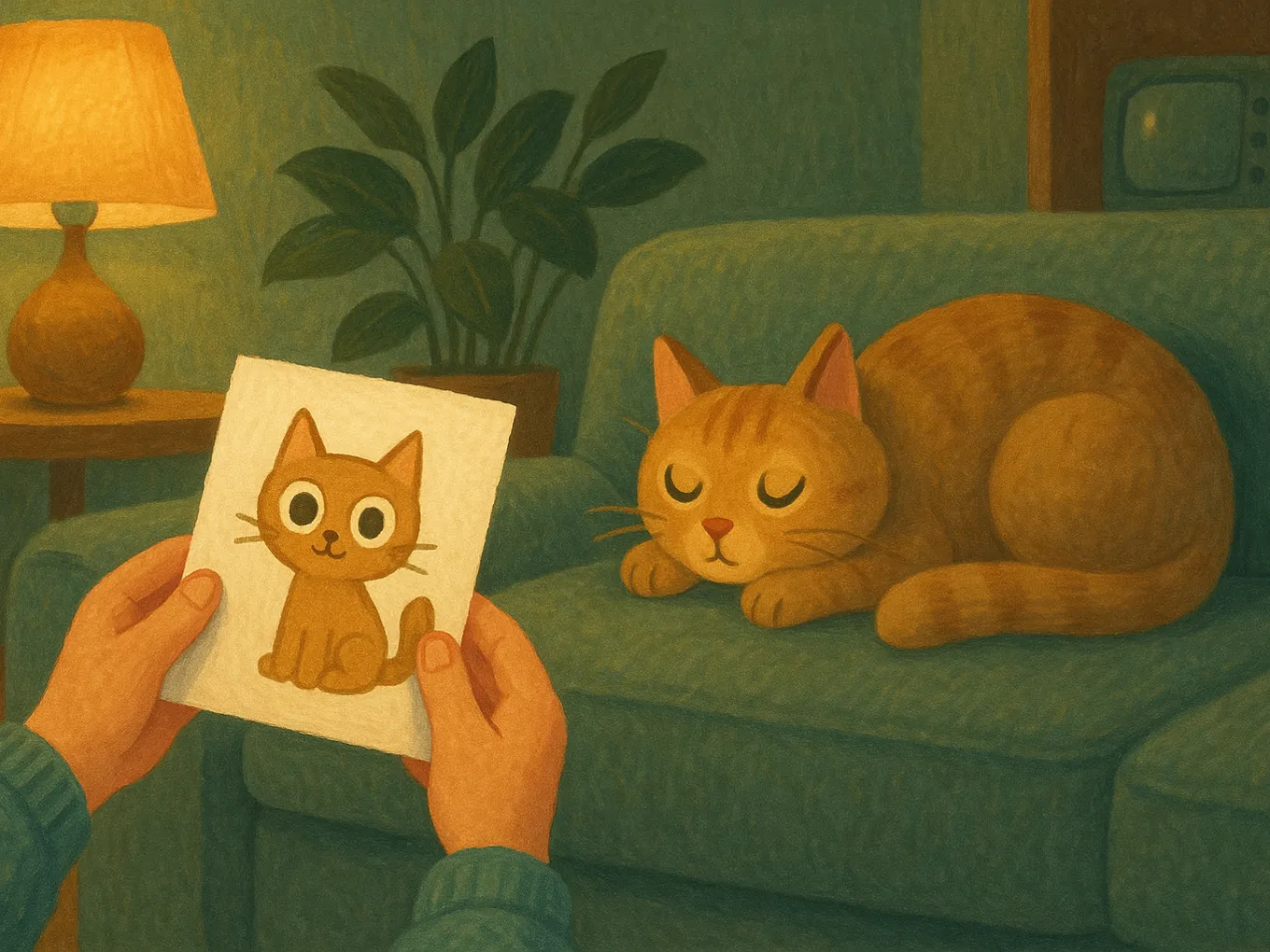
- Flashcards with pictures, no translation on the front. The word cat should connect with the image of a cat, not with the word “cat,” so write the translation on the back.
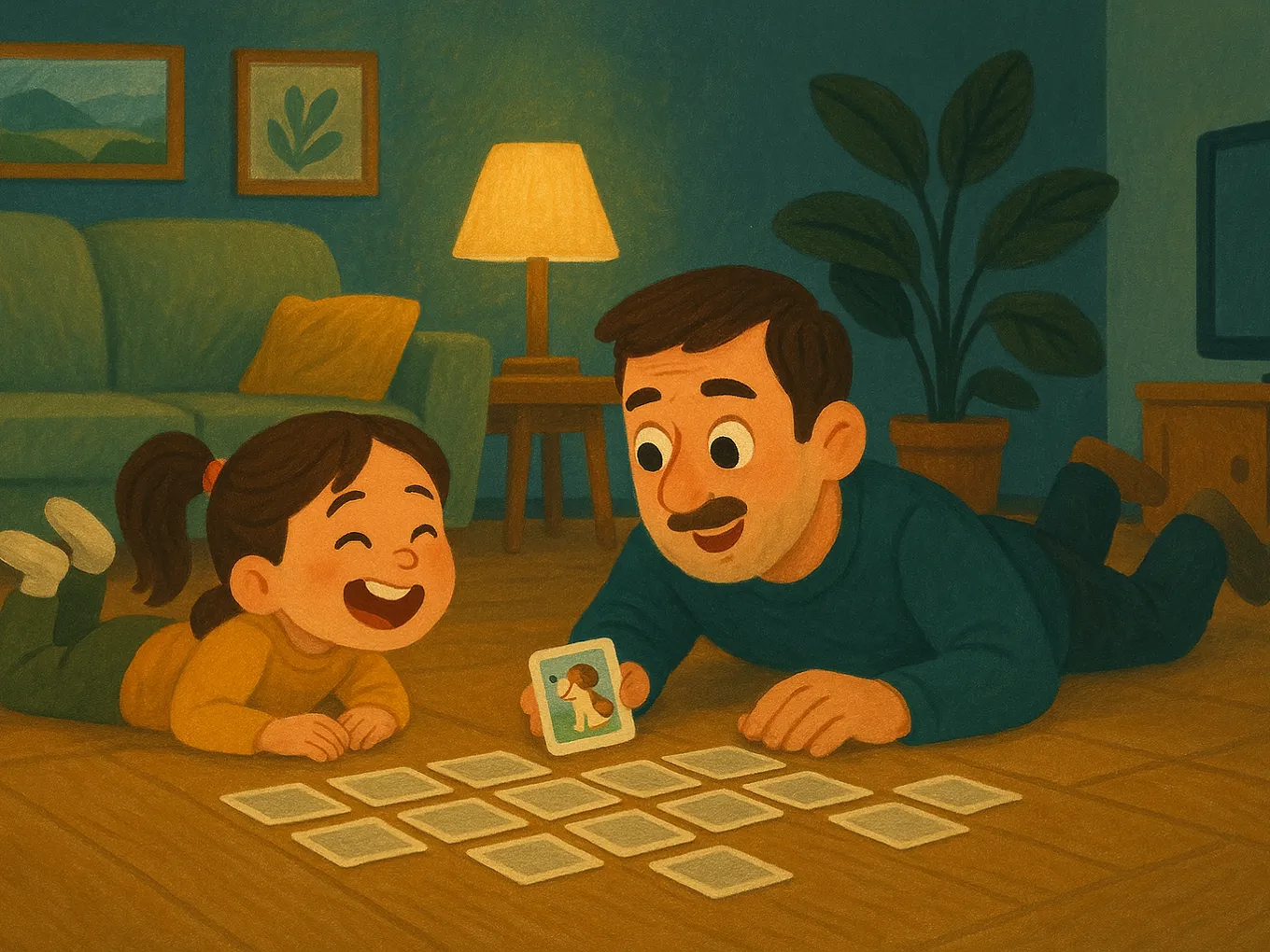
- Play instead of drilling. “Bring me…,” “Show me…,” “What disappeared?,” memory matching with card pairs.
- Spaced repetition. The next day, then after 3, 7, and 14 days — otherwise up to 80% of what was learned will be forgotten. The Leitner method with the same flashcards is in the article how to help a child remember English words. The hardest part is not losing the schedule: boxes of flashcards and a repetition calendar are usually something nobody keeps up with after a week. So it’s easiest to hand the schedule over to Mova: the app picks the words that are due every day on its own, sends mistakes back to tomorrow, and you don’t have to count anything.
- Use words in phrases right away. Learned colors and animals? Make phrases: a red cat, a big dog. By the way, in Mova the words don’t live separately either: the child meets them in a short lesson text.
How many words a child needs in total — see the article how many English words a child should know and the Oxford 3000 list: all 134 words from here are included in that core list.
How Mova repeats words for you
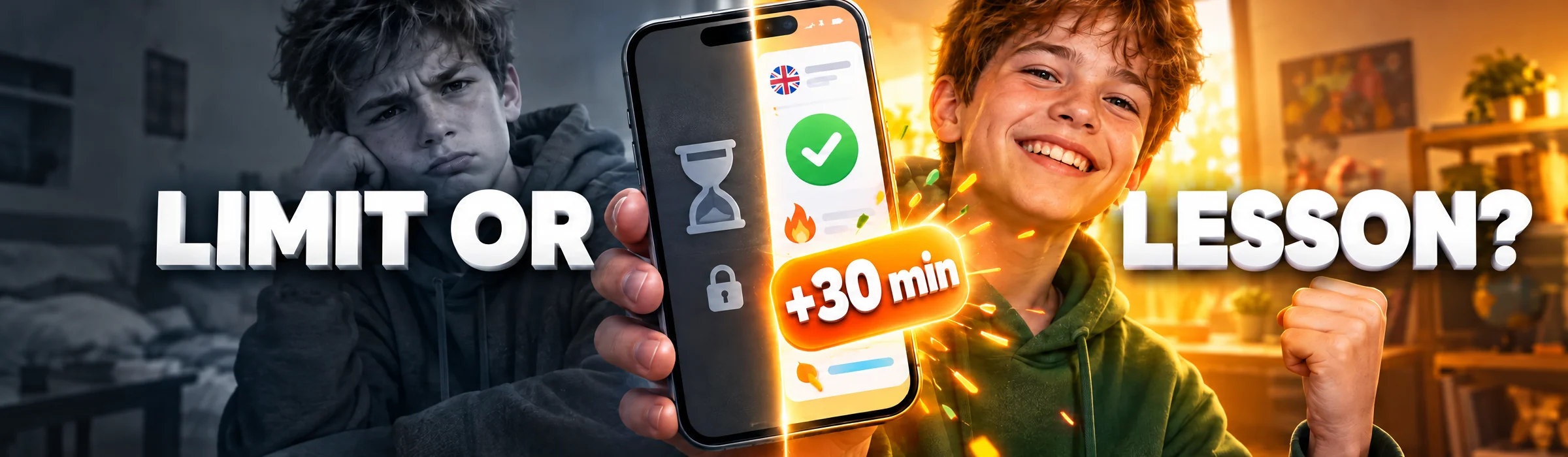
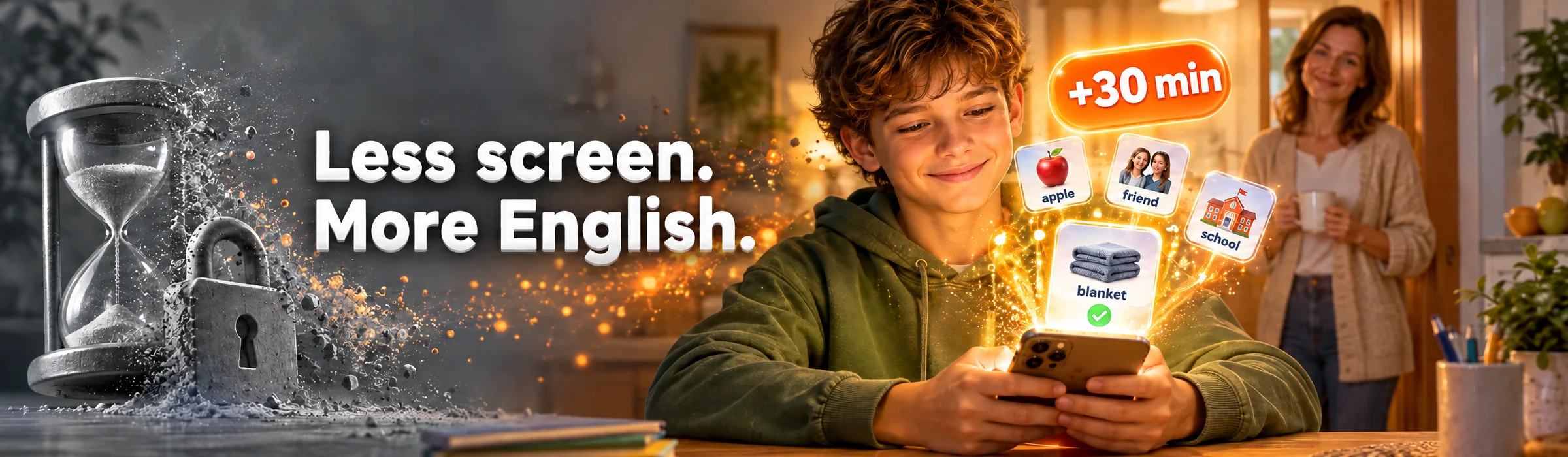
Flashcards are easy to print and hard to keep repeating for weeks: parents get tired of reminding, and kids get tired of sitting down “for English.” Mova takes that on: a daily English lesson on the child’s iPhone, while games, social media, and videos open only for the minutes earned by that lesson. No reminders or negotiations are needed — the phone itself becomes the reason to review the words. The flashcards can still be used for play with your little one, while Mova handles the consistency that usually makes them fall apart.
- 6 words and 1 rule a day, then a short quiz — within the same 5–7 words.
- The app counts the intervals. Correct answer — the word returns after 1, 3, 7, 14, 30 days; a mistake — it comes back tomorrow. “Knows” means four correct answers with increasing gaps.
- Minutes for results. A “Super” quiz earns 30 minutes of screen time, “Good” earns 20, and if all the day’s quizzes are “Super,” that’s another +10. You can change or turn off the rewards.
- The level adjusts automatically, with no placement test.
- A streak keeps the rhythm. For every 5 days in a row without missing, you get bonus minutes.
- You can see progress. In the parent dashboard: how many words the child knows and how many they are learning.
What it cannot do: explain live — card games for little kids are still up to you. And it works only on iPhone.
Ukrainian-letter transcription: pros and cons
Ukrainian letters in the tables are a compromise, and it has limits.
| Pros | Cons |
|---|---|
| Parents who don’t know English can study with their child today | Sounds like th, w, ə can’t be conveyed accurately with Ukrainian letters |
| The child isn’t intimidated by phonetic transcription symbols | There is a risk of cementing a “Ukrainianized” pronunciation |
| Enough for passive vocabulary: hear it and recognize it | It doesn’t teach reading: the “letter-sound” link doesn’t form that way |
Transcription is a hint for you, and every new word should be played for the child in an online dictionary. When your child becomes interested in letters, start with the English alphabet with pronunciation and transcription.
Frequently Asked Questions
Which English words should I start with for my child?
Start with what your child sees every day: family, colors, toys, food, animals. Short words that are easy to show: cat, dog, red, mum, apple.
How many words should we learn at once?
5–7 new words per session: better 5 the child will remember tomorrow than 20 forgotten by evening. In Mova, there are exactly 6 new words per day, and previously learned ones return for review on schedule.
Do we need Ukrainian-letter transcription?
As a hint for parents — yes. But it’s approximate, so also turn on the audio in an online dictionary.
How do I teach words to a child who still can’t read?
By ear and through pictures: you say the word, the child points to the card, then the other way around. Reading comes later, after the alphabet.
How many English words should a 6–7-year-old child know?
Over a year of calm practice, 100–200 words by ear is a good result — that’s 10–15 topics from this list. There’s no strict norm.
Can we study several topics in parallel?
For new material — better not: one topic for one or two weeks. And old material should be reviewed together with the new one.
Want the words to repeat on schedule without your reminders? Try Mova for free.
Also read:
- How many English words a child should know + the Oxford 3000 list
- English for preschoolers ages 5–6: where to start
- Games for learning English with a child: ideas with and without gadgets
- English alphabet for kids: pronunciation and transcription
- How to teach a child to study independently: the 15-minutes-a-day habit