English Alphabet for Kids: Pronunciation and Transcription
The English alphabet has 26 letters: 5 vowels and 21 consonants. The main thing for parents to know is that a letter’s name and its sound in a word are different things. C is called “si,” but in cat it is pronounced like “k” — and for a child to read, they need the sounds, not just the names.

Roman Shkabko · 9 min read
English Alphabet: Table with Transcription and Pronunciation
Name with IPA transcription and Ukrainian spelling, the main sound, and a word example. Ukrainian pronunciation is a hint for parents, not a replacement for audio: a child should hear the original.
| Letter | Name (transcription) | Main sound | Word example |
|---|---|---|---|
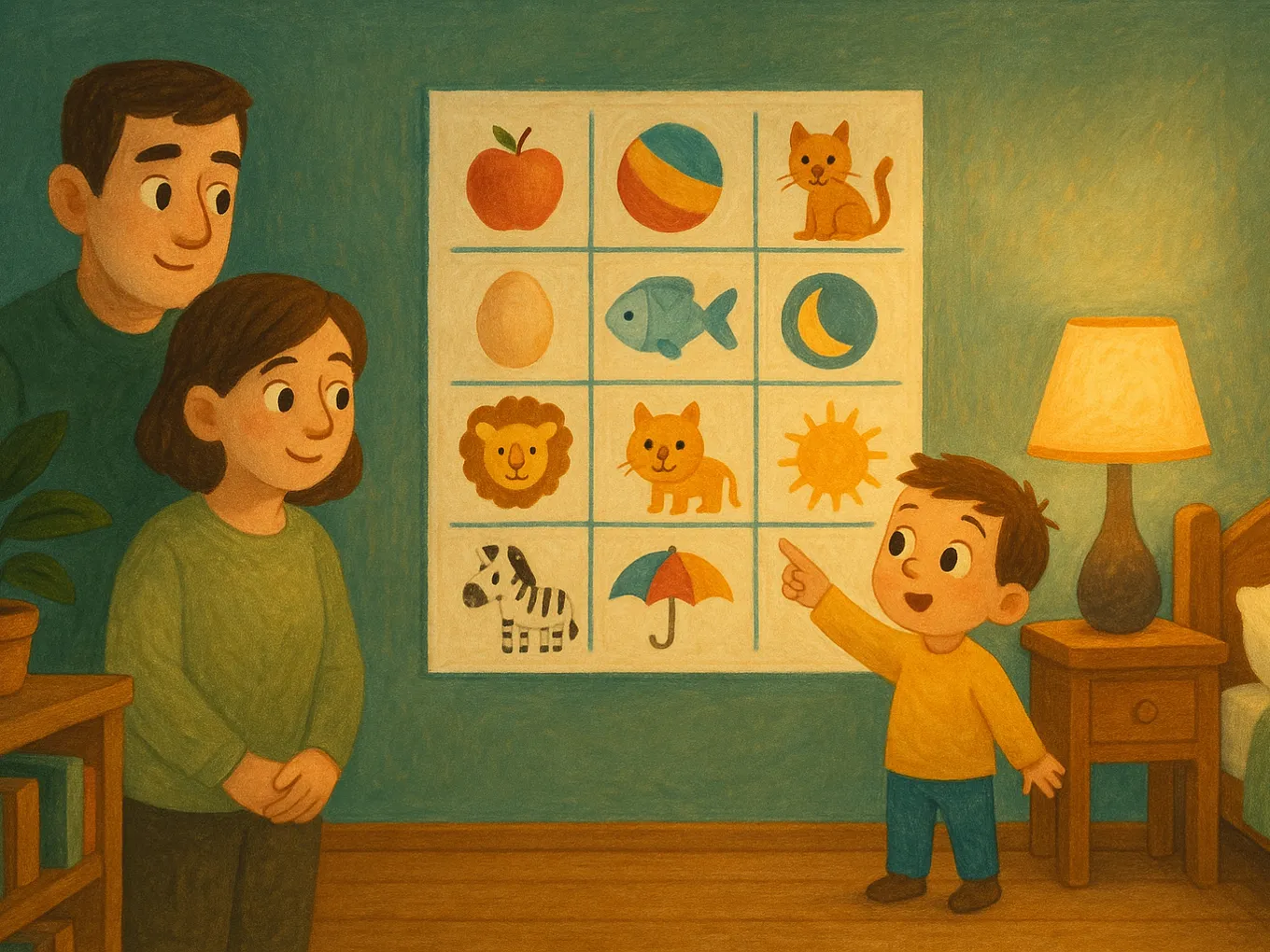
| A a | /eɪ/ — ey | /æ/ — “e” with an open mouth | apple — apple |
| B b | /biː/ — bee | /b/ — b | ball — ball |
| C c | /siː/ — see | /k/ — k | cat — cat |
| D d | /diː/ — dee | /d/ — d | dog — dog |
| E e | /iː/ — ee | /e/ — e | egg — egg |
| F f | /ef/ — ef | /f/ — f | fish — fish |
| G g | /dʒiː/ — jee | /g/ — g | game — game |
| H h | /eɪtʃ/ — aych | /h/ — a light “h” on the exhale | hat — hat |
| I i | /aɪ/ — eye | /ɪ/ — short “i” | igloo — igloo |
| J j | /dʒeɪ/ — jay | /dʒ/ — j | juice — juice |
| K k | /keɪ/ — kay | /k/ — k | key — key |
| L l | /el/ — el | /l/ — l | lion — lion |
| M m | /em/ — em | /m/ — m | moon — moon |
| N n | /en/ — en | /n/ — n | nose — nose |
| O o | /əʊ/ — oh | /ɒ/ — short “o” | orange — orange |
| P p | /piː/ — pee | /p/ — p | pen — pen |
| Q q | /kjuː/ — cue | /kw/ — kw (always in the qu pair) | queen — queen |
| R r | /ɑː(r)/ — a(r) | /r/ — a soft “r” without vibration | rabbit — rabbit |
| S s | /es/ — ess | /s/ — s | sun — sun |
| T t | /tiː/ — tee | /t/ — t | tiger — tiger |
| U u | /juː/ — yoo | /ʌ/ — short “u” | umbrella — umbrella |
| V v | /viː/ — vee | /v/ — v | violin — violin |
| W w | /ˈdʌbljuː/ — double-u | /w/ — a “w” with rounded lips | water — water |
| X x | /eks/ — ex | /ks/ — ks (more often at the end of a word) | fox — fox |
| Y y | /waɪ/ — why | /j/ — y | yellow — yellow |
| Z z | /zed/ — zed (BrE), /ziː/ — zee (AmE) | /z/ — z | zebra — zebra |
For /æ/, /w/ or /r/, there are no direct Ukrainian equivalents, so it is important for a child to hear real audio rather than only read “ay-bee-see” in Ukrainian letters.
Letter name vs sound: why C is “si” but is read as “k”
This is the main trap for beginners. In Ukrainian, a letter’s name almost matches its sound: “be” — /b/. Not so in English: a child learns that C is “see,” and in cat they will logically read “set.”
Examples of the gap between name and sound:
- C — “see,” but in cat, cup it sounds like /k/;
- G — “jee,” but in go, big it sounds like /g/;
- W — “double-u,” but the sound is the short /w/, as in water;
- H — “aych,” but the sound is an exhaled /h/, as in hat;
- Y — “why,” but the sound is most often /j/, as in yes.
Letter names are needed for spelling a name or finding a word in a dictionary. For reading, you need sounds — that is why English-speaking schools teach reading through phonics. How to use this at home is explained in the article how to teach a child to read in English.
How to teach the English alphabet with a child: 6 ways
- ABC song. The “Twinkle, Twinkle” melody + 26 letters, together every day. One nuance: L-M-N-O-P blend into “elemenopee” — show separately that these are five letters.
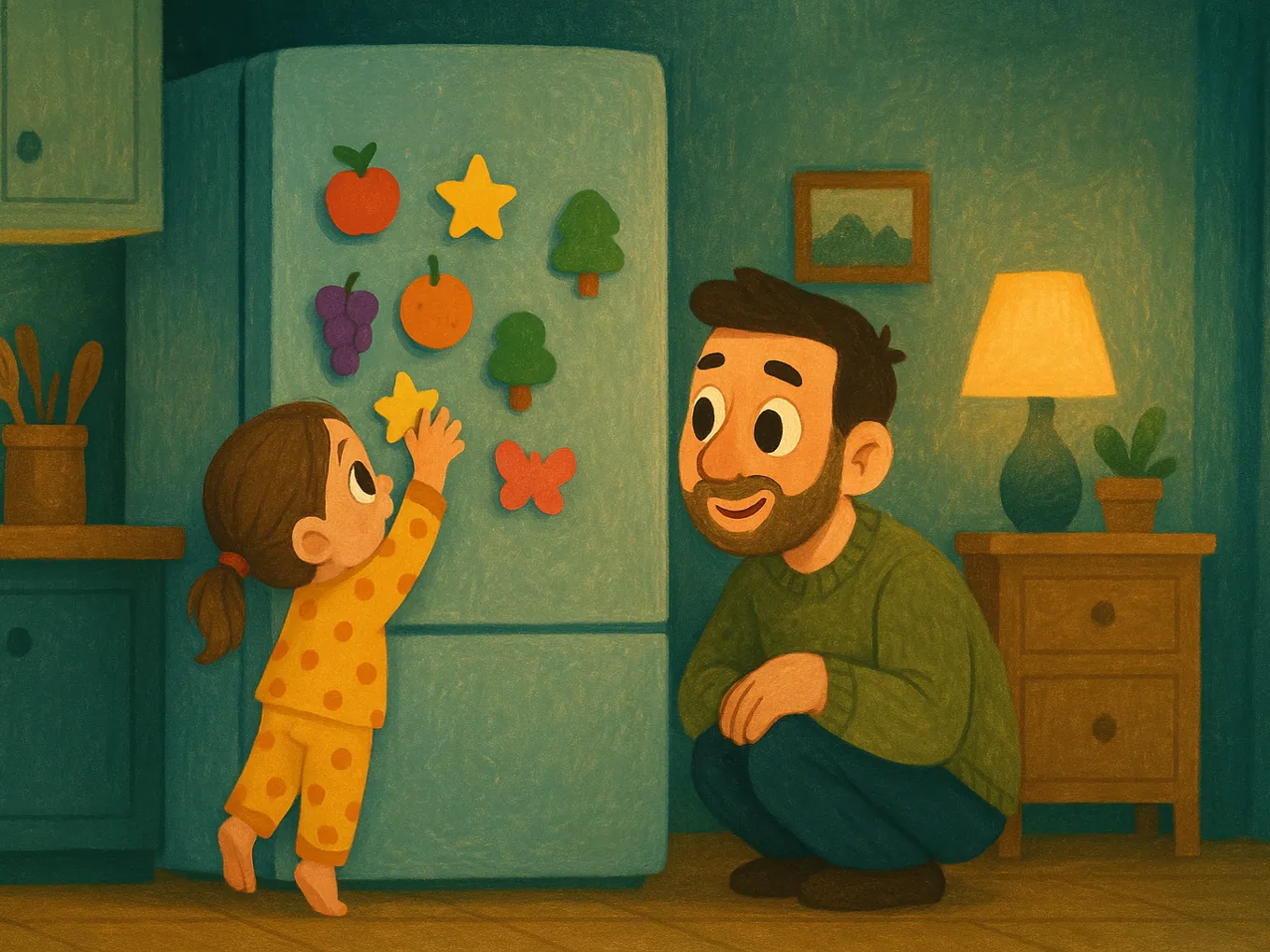
- Magnetic letters on the fridge. Games: “find B,” “make your name,” “which letter did I hide?”
- Letter hunt in a book. Find all the A’s on a page — this helps a child recognize the letter in different fonts.
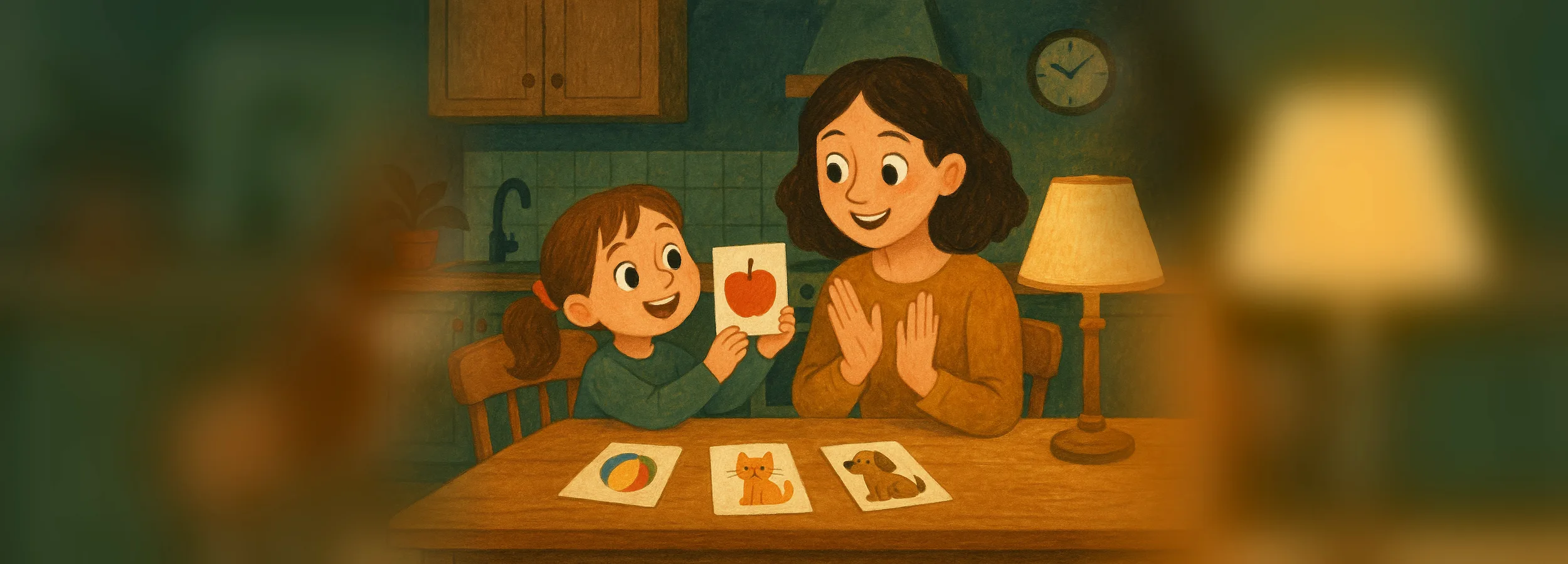
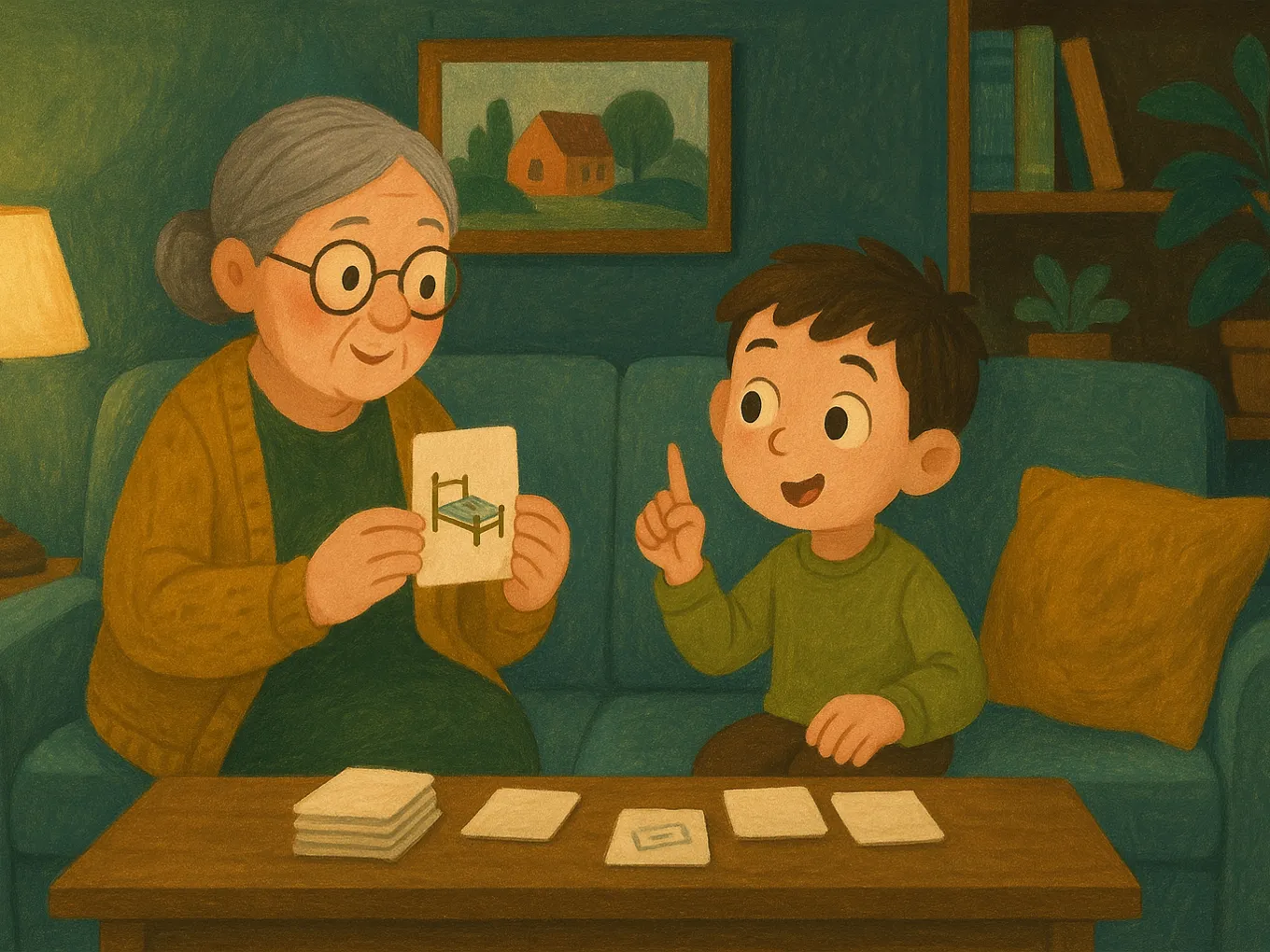
- Flashcards. Letter on one side, a word with a picture on the other (A — apple). Use 4–6 cards at a time, and review learned ones every few days — just like the words in the подборка English words for kids by topic.
- Writing with a finger in the air, in semolina, or on mom’s back: the movement helps the hand remember the shape better.
- Cartoons about sounds. Series where each letter is a character that says its own sound (not its name!) are the best way to connect “letter — sound.” Other cartoons by level are in the подборка cartoons in English for kids.
Pace: 5–10 minutes a day, 2–4 new letters a week, the whole alphabet in 1.5–3 months.
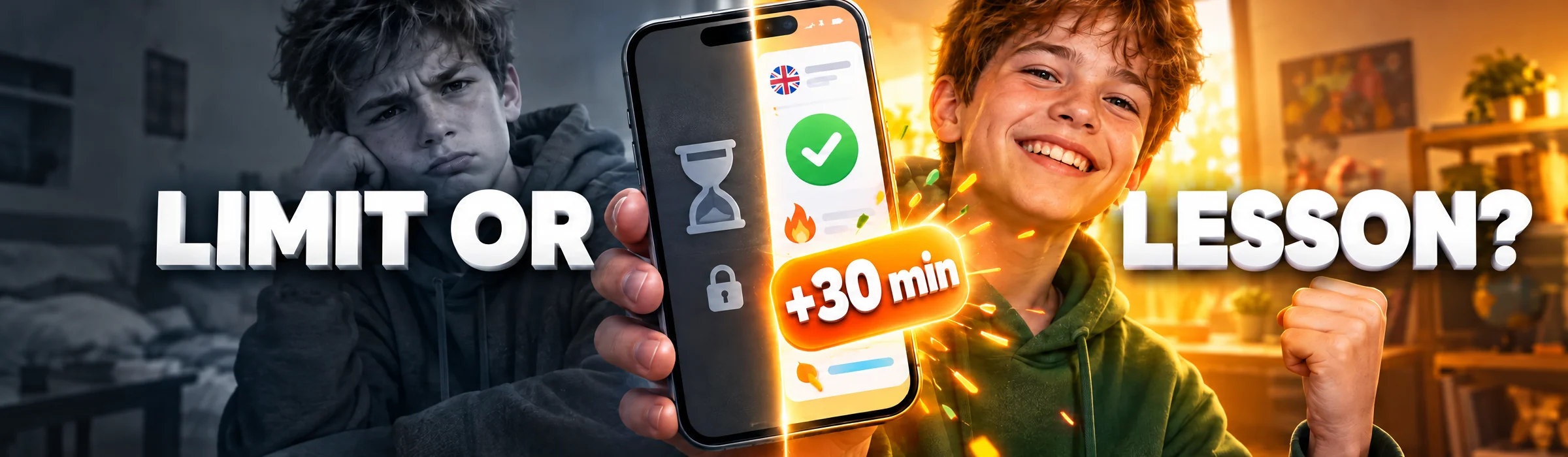
Harder than any method is not skipping days. A “5 minutes every day” schedule on the fridge usually isn’t kept up after a week. Once the letters are familiar and your child starts making their first words, the easiest thing is to hand over the daily part to Mova: one lesson a day, iPhone minutes are counted automatically, and games and videos open only for the time earned — parents do not need to remind or keep track. The song and magnets can stay as a game, not a duty.
Order of learning: do letters need to be taught in alphabetical order
No. British schools teach letters in the order s, a, t, p, i, n: from these, a child can immediately make real words — sat, pin, tap — and the “I can read!” moment motivates more than the song.
Home plan:
- ABC song — as background from the start.
- Recognition and sounds — in the order s, a, t, p, i, n → m, d, g, o, c, k → then the rest.
- Alphabetical order — later, closer to school, for the dictionary.
Words and phrases by ear go alongside letters, not after them: in Mova, for example, a lesson can be not only read but also listened to, so words start to build up even before confident reading. More details in the guide English for preschoolers aged 5–6.
Uppercase and lowercase letters
Start with uppercase — they are simpler. But do not delay lowercase for too long: in texts, 95% of letters are lowercase. Pairs come in three types:
- The same, only smaller: C c, O o, S s, V v, W w, X x, Z z, P p, K k, U u.
- Similar: F f, I i, J j, M m, N n, T t, Y y — these need several repetitions.
- Completely different: A a, B b, D d, E e, G g, H h, L l, Q q, R r — these are best learned with separate “find the pair” games.
Common confusions and how to handle them
| What gets mixed up | Why | What to do |
|---|---|---|
| b and d | Mirror-image shapes; up to age 7–8 this is normal, not “carelessness” | The “bed” clue: the word looks like a bed — b has its back on the left, d on the right |
| p and q | The same mirror effect, with a tail pointing down | Finger writing; q almost always appears with qu |
| The names E and I | E is called “ee” /iː/, while I is “eye” /aɪ/ | “E says ee, and I says eye”; flashcards E — eagle, I — ice |
| The names G and J | G — “jee” /dʒiː/, J — “jay” /dʒeɪ/: almost identical | Link to words: G — girl, J — jam |
| The names A and R, pronounced in Ukrainian | “Ey” and “a(r)” blend together if pronounced unclearly | Listen to the original audio |
A reason to consult a specialist is only if, after age 8, a child consistently confuses letters and also struggles to read in their native language.
After the alphabet: where Mova helps
The song and magnets work as long as someone remembers them every day. Once a child recognizes letters and makes their first words, Mova takes over the daily practice — and does it on its own, without charts or reminders:
- One lesson a day, no reminders. Games, social media and videos on the child’s iPhone are locked and open only for minutes earned through the English lesson: “Super” test — 30 min, “Good” — 20 min.
- Original pronunciation. The lesson text can be not only read but also listened to.
- Starts with the easiest. From age 5, no placement test; the level adjusts every day.
- Words are not forgotten. Repetition after 1, 3, 7, 14, 30 days; if there is a mistake, it comes back tomorrow.
- A streak motivates. Every 5 days in a row brings bonus minutes.
- No need to sit beside them. Each day’s result appears in the parent dashboard.
What it does not do: it does not teach letters separately — the song, flashcards and magnets remain up to you.
Frequently asked questions
How many letters are in the English alphabet?
26 letters: 5 vowels (a, e, i, o, u) and 21 consonants. There are about 44 sounds — that is why one letter is often read differently.
Which is correct: “zed” or “zee”?
Both are correct: “zed” /zed/ is British pronunciation, “zee” /ziː/ is American. Choose one and do not correct the child for using the other.
At what age should a child start learning the English alphabet?
Roughly from age 4–5, when the child recognizes Ukrainian letters. Earlier than that, the ABC song should just be a game, with no requirement to memorize it.
Does a child need to learn transcription?
At ages 5–7 — no. IPA symbols like /eɪ/ are for older schoolchildren with dictionaries. For a child, it is enough to hear the correct pronunciation and repeat it.
How quickly can you learn the English alphabet with a child?
2–4 new letters a week for 5–10 minutes a day — the whole alphabet in 1.5–3 months. Harder than the method itself is not skipping days; in Mova, the daily lesson is tied to screen-time minutes the child earns.
How is a letter’s name different from its sound?
The name is how the letter is called in the alphabet (C — “see”), and the sound is how it is read in a word (cat — “k”). Sounds are needed for reading; names are for spelling and dictionaries.
The alphabet is learned — want English to become a daily habit without reminders? Try Mova for free.
Also read: