Cartoons in English for Kids: A List by A1–B1 Level
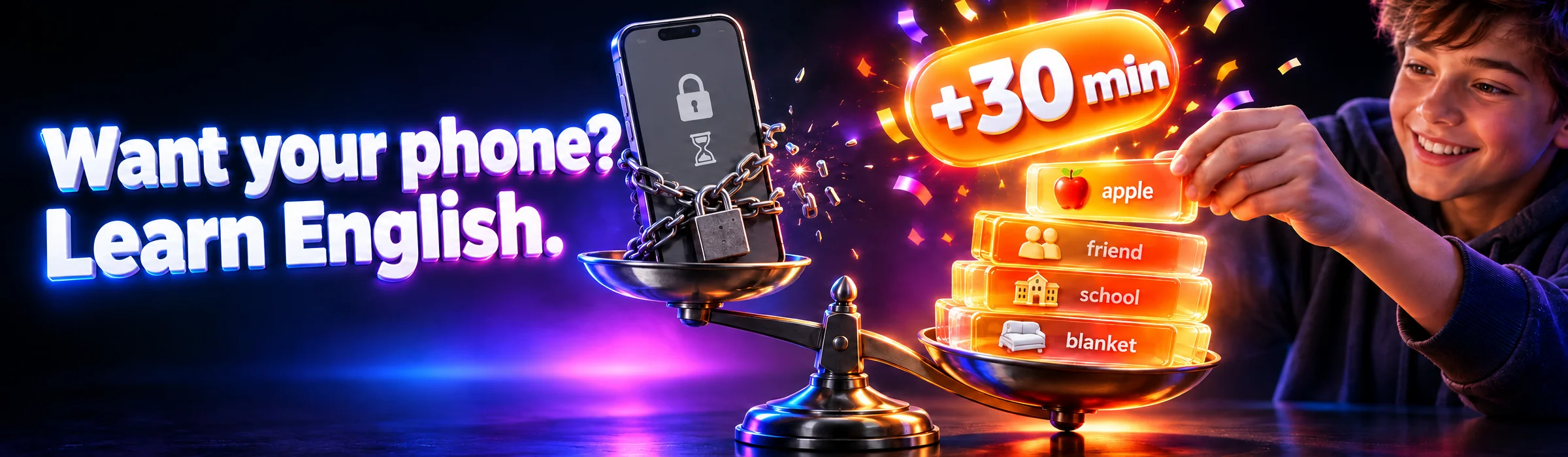
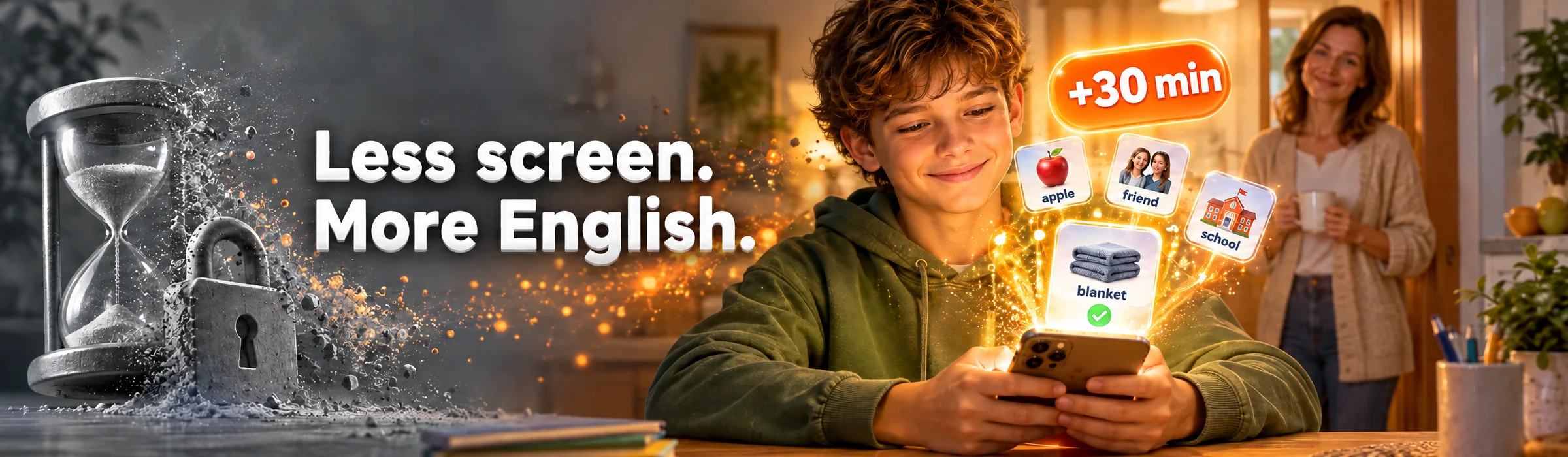
Cartoons in English work when they match your child’s level: for preschoolers — Peppa Pig, Bluey, and Numberblocks; for ages 7–10 — Martha Speaks and Octonauts; for teens — Hilda, Gravity Falls, or Avatar. Below are 15 cartoons by level from Pre-A1 to B1, an age chart, and the rules that make the difference between learning and just entertainment. And so an episode comes after the lesson, not instead of it, Mova only unlocks video on your child’s iPhone after an English lesson.

Roman Shkabko · 10 min read
How to watch so it actually helps
On its own, a cartoon in English doesn’t teach much — a child mainly follows the visuals. The difference comes from five simple rules:
- No subtitles in the native language. The brain reads familiar text and stops listening. For younger kids — no subtitles at all; for school-age children who already read in English — English subtitles.
- Short episodes instead of full-length movies. 5–11 minutes is a complete story a child can stay focused on. A one-hour film for a beginner is just noise.
- Repeating the same episodes is a good thing. On the second or third watch, the child is no longer struggling with the plot and starts hearing the phrases. If they ask for their favorite episode for the tenth time — let them.
- Pause and repeat phrases. Once or twice per episode, pause and repeat a vivid line together: “Let’s go!”, “I’m hungry!”. One or two phrases, not a dictation exercise.
- After the lesson, not instead of it. Cartoons reinforce what a child has already seen in class, but they do not replace vocabulary, grammar, and practice. Their place in the routine is as a reward after learning. And so this order doesn’t depend only on your memory, Mova unlocks video on your child’s iPhone only for the minutes earned through an English lesson.
Pre-A1/A1: cartoons for preschoolers ages 3–6
Criteria: slow, clear speech, everyday vocabulary, lots of repetition, episodes up to 8 minutes long.
Peppa Pig
Short sentences, clear British pronunciation, vocabulary about family, food, and games; recurring structures (“Peppa loves…”, “It’s time for…”). After a few weeks, phrases from the episodes start showing up in play.
Bluey
An Australian family of dogs. The speech is faster than in Peppa Pig, but every episode is built around a game you can play together right away.
Kids’ nursery rhyme videos
Clips that are 2–3 minutes long: “The Wheels on the Bus”, “Head, Shoulders, Knees and Toes”. Melody plus gestures makes the words stick almost by themselves. A great first contact with English for ages 2–4.
Numberblocks
Numbers as characters: counting and simple addition in English (“one plus one equals two”), with slow and clear speech.
Alphablocks
The same idea, but for letters: each letter is a character with its own sound, and together they “build” words. Phonics in cartoon form.
Pocoyo
The narrator slowly comments on what’s happening on screen and asks the viewer questions — easy to follow even from zero.
If your child is 5–6 and you’re just getting started, take a look at the English lesson plan for preschoolers — cartoons are one of the tools there.
A1–A2: cartoons for children ages 7–10
At this stage, you need a real plot or it gets boring. The speech is faster, and episodes run 7–25 minutes.
Martha Speaks
Martha the dog ate alphabet soup and started talking. Each episode introduces 5–7 “target” words that the characters explain and repeat.
Arthur
A school-age aardvark: school, friends, homework. Exactly the kind of vocabulary kids use to talk about their day, and there are enough seasons to last for years.
Puffin Rock
A calm cartoon about puffins with a gentle narrator — a good bridge when Peppa is already too babyish, but more advanced series are still too hard.
Octonauts
Underwater explorers rescue animals: animal names, science facts, and action commands (“To the launch bay!”).
Wild Kratts
Half cartoon, half educational animal show. The vocabulary is richer and faster than in Octonauts.
Ben and Holly's Little Kingdom
From the creators of Peppa Pig, but with longer episodes and more complex language — for kids who have “outgrown” Peppa Pig.
A2–B1: animated series for ages 10+
Teenagers need a story they genuinely want to follow: natural speech speed, idioms, and humor.
Avatar: The Last Airbender
A saga with an ongoing plot: it makes you want to turn on the next episode, not “switch it off because it’s too hard.” Clear speech and lots of dialogue about emotions and relationships.
Gravity Falls
Twins in a strange small town: quick jokes, sarcasm, and conversational phrases. If your child can follow it without translation, their listening is around A2–B1.
Hilda
A girl, trolls, and spirits; a measured pace and very clear pronunciation. Easier than Gravity Falls — a good first “grown-up” series for ages 10–11.
Adventure Time
Absurd humor, conversational vocabulary, and slang — for kids who already understand easier series.
To see whether your child is ready for this level, check the article on a child’s English level by age.
Cartoons about the English alphabet
There are two different goals here:
- Letter names (A, B, C) — that’s the “ABC Song” in any singalong version. Two or three minutes, and kids usually learn it within a few weeks of daily watching.
- Letter sounds and reading — that’s Alphablocks: each letter says its sound, and together they build words. To start reading, sounds are what matter.
The order is simple: alphabet song first, and alongside it or right after, Alphablocks. One song and one episode a day, and in 4–6 weeks you can move on to reading simple words.
Quick chart: cartoon → age → level → episode length
| Cartoon | Age | Level | Episode |
|---|---|---|---|
| Kids’ nursery rhyme videos | 2–5 | Pre-A1 | 2–3 min |
| Peppa Pig | 3–6 | Pre-A1–A1 | 5 min |
| Pocoyo | 3–6 | Pre-A1–A1 | 7 min |
| Alphablocks | 4–7 | Pre-A1–A1 | 5 min |
| Numberblocks | 4–7 | Pre-A1–A1 | 5 min |
| Bluey | 4–8 | A1 | 7–8 min |
| Ben and Holly's Little Kingdom | 5–8 | A1 | 11 min |
| Puffin Rock | 6–9 | A1 | 7 min |
| Octonauts | 6–9 | A1–A2 | 11 min |
| Martha Speaks | 7–10 | A1–A2 | 2×12 min |
| Arthur | 7–10 | A1–A2 | 2×11 min |
| Wild Kratts | 8–11 | A2 | 25 min |
| Hilda | 10+ | A2 | 25 min |
| Avatar: The Last Airbender | 10+ | A2–B1 | 23 min |
| Adventure Time | 11+ | A2–B1 | 11 min |
| Gravity Falls | 11+ | A2–B1 | 22 min |
The levels are approximate: if your child understands less than half without visual clues, move one row up; if they understand everything and are bored, move one row down.
Cartoons as a reward: the “lesson → episode” routine
The most common mistake is using cartoons as background instead of actual learning: the TV is talking, the child is playing, and the English doesn’t stick. A different setup works better:
- First, the lesson: a few new words, one short grammar point, a couple of tasks. If you’re not sure how to do this even without knowing English yourself, see the article on English at home with your child.
- Then, right after, an episode. The child gets a reward, and the brain gets a second round of English in a relaxed mode. Words from the lesson that come up in the episode are remembered best.
- The rule stays the same: no lesson, no episode. Not a punishment, just the order of things. After two or three weeks, it becomes the norm.
The weak point in this system is that you are the one holding it together. For the first few weeks, the rule works; then one difficult evening comes along, the lesson gets skipped, the tablet still gets turned on — and a week later no one is really keeping track anymore. With Mova, it happens automatically: there’s a lesson every day in the app, minutes are added automatically, and videos and games on the iPhone only open for what’s been earned. You don’t have to count or remind anyone.
Between episodes, games for learning English work especially well — they add the speaking practice cartoons lack. And if you want to turn all this into a system, see the guide to English for kids.
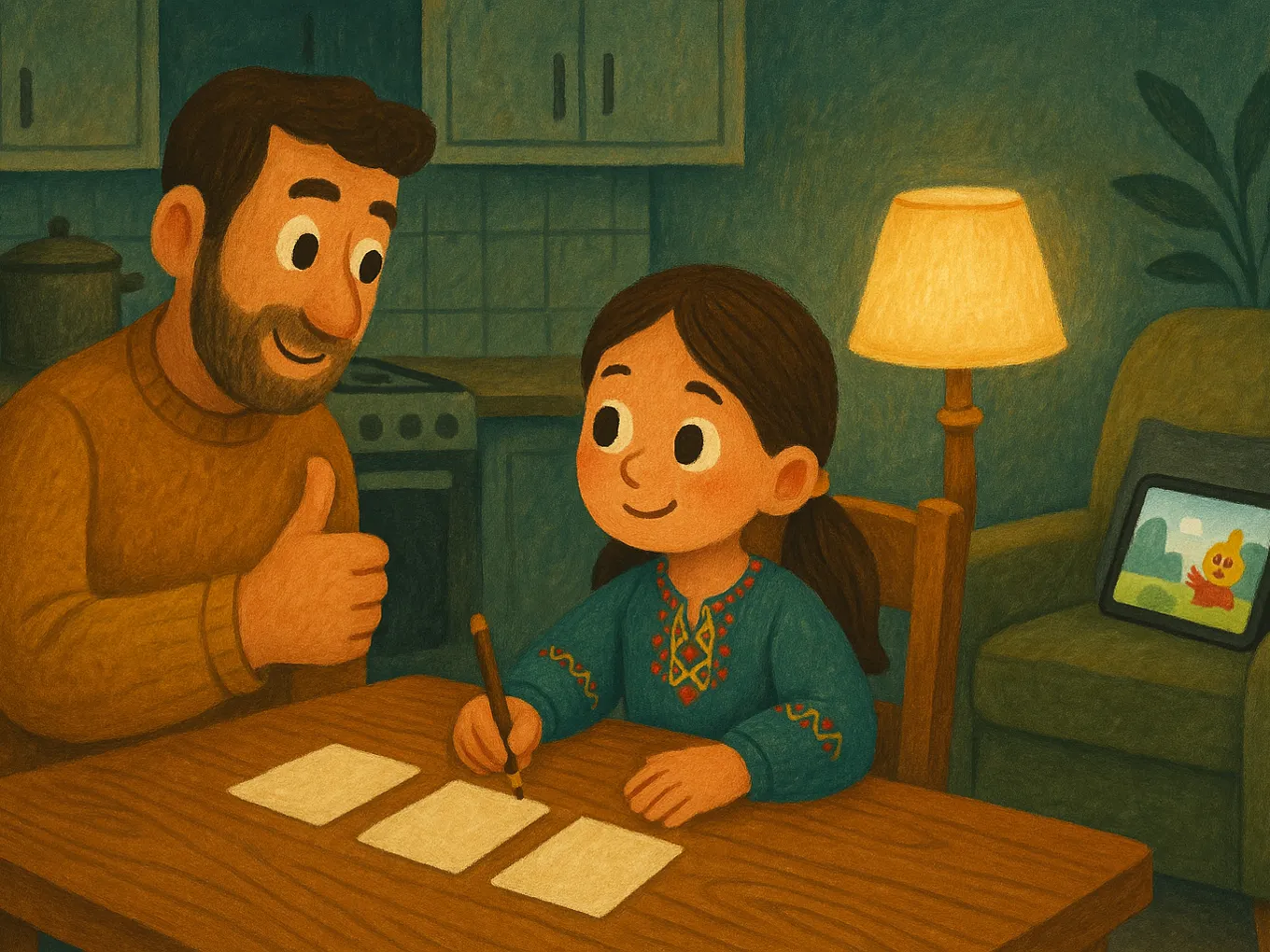
Mova: the episode unlocks after the lesson
Mova brings the “lesson → episode” routine to your child’s iPhone: video, games, and social media are locked using Apple’s system controls and only open for minutes earned through a daily English lesson.
- Locked by category. Video, games, and social media are blocked by whole categories, any new game is blocked automatically, and the list can only be changed with the parent PIN.
- Minutes for an episode have to be earned. A “Great” test score gives 30 minutes, a “Good” score gives 20, and getting “Great” on all tests that day adds another +10. You decide how many minutes to give and whether unused minutes expire overnight.
- Words from the lesson don’t get lost. Spaced repetition using the Leitner method: each word comes back after 1, 3, 7, 14, and 30 days, and a missed word returns as soon as tomorrow.
- The level adjusts on its own. No placement test, and your child’s progress is visible in the web dashboard.
- One balance across all devices. The child signs in with a parent code, no email needed, and the minutes are shared across all of their devices.
Mova does not show the cartoons themselves: your child watches the episode wherever they usually do — just after the lesson.
Frequently asked questions
At what age can I start showing my child cartoons in English?
From the same age you allow screen time in general (WHO recommends no more than one hour a day for children ages 2–4). If your child is already watching cartoons, simply switch the language: children ages 3–5 usually accept this more easily than children at 8.
Should I turn on subtitles while watching?
In the native language — no: the child reads the translation and stops listening. Up to ages 6–7, it’s better without subtitles; for school-age children who can read in English, use English subtitles.
Will Peppa Pig in English help my child start speaking?
Peppa Pig gives children strong, short phrases, and they often start quoting them. But speaking only appears when the child starts using those phrases themselves — in play, in lessons, and with you.
How many minutes of cartoons in English per day is enough?
For preschoolers — 1–2 short episodes (10–15 minutes); for school-age children — 20–25 minutes. Fifteen minutes every day gives more than 2 hours on Saturday. In Mova, video on the iPhone opens for minutes earned through the lesson: a “Great” test score gives 30 minutes, a “Good” score gives 20, and you can adjust that limit yourself.
My child asks me to translate every phrase. What should I do?
Explain the situation, not the phrase: “They’re looking for the ball.” If this keeps happening, the cartoon is too difficult — drop down one level. Understanding 70–80% and guessing the rest from the visuals is normal.
Can a child learn English from cartoons alone?
No: cartoons give listening practice and live vocabulary, but not speaking, reading, or writing. They work best after a lesson with words and a grammar point. In Mova, the phone holds that routine together: video unlocks after the daily lesson, and words keep coming back for review until they’re learned.
Want episodes in English to come after the lesson, not instead of it? Try Mova for free.
Read also:
- Games for learning English with your child: ideas with and without gadgets
- A child’s English level by age and grade: how to check it
- English for preschoolers ages 5–6: where to start
- The English alphabet for kids: pronunciation and transcription
- How to teach a child to read in English (phonics in simple terms)