
How much does English cost for a child: tutor vs. courses vs. an app
A year of English for a child in 2026 costs anywhere from zero to UAH 60,000–70,000: a private tutor is roughly UAH 300–800/hour, group courses UAH 1,500–3,500/month, online schools UAH 400–900/lesson, apps UAH 0–500/month. The best value for the most practice is a mix of “a teacher once a week + a daily practice tool,” for example Mova, where the daily lesson keeps itself on track: games on the iPhone unlock only for minutes earned by completing an English lesson.

Roman Shkabko · 10 min read
| Format | Price, UAH/month* | Price, UAH/year* | What’s included |
|---|---|---|---|
| Private tutor (300–800 UAH/hour) | 2,400 – 6,400 (2 lessons/week) | ≈ 26,000 – 70,000 | Personalized program, full attention to the child |
| Group English courses for children | 1,500 – 3,500 | ≈ 15,000 – 35,000 | 2 classes/week in a group of 6–12 children |
| Online schools (one-on-one with a teacher) | 3,200 – 7,200 (400–900 UAH/lesson, 8 lessons) | ≈ 35,000 – 79,000 | Platform, homework, reports for parents |
| English learning apps | 0 – 500 | 0 – 6,000 | Daily practice, vocabulary, review |
| Free resources (cartoons, songs, materials) | 0 | 0 | Exposure to the language — without structure or control |
*Prices are approximate, 2026. In Kyiv and large cities — the upper end of the range; in smaller cities and online — the lower end.
Tutor: when you really need one
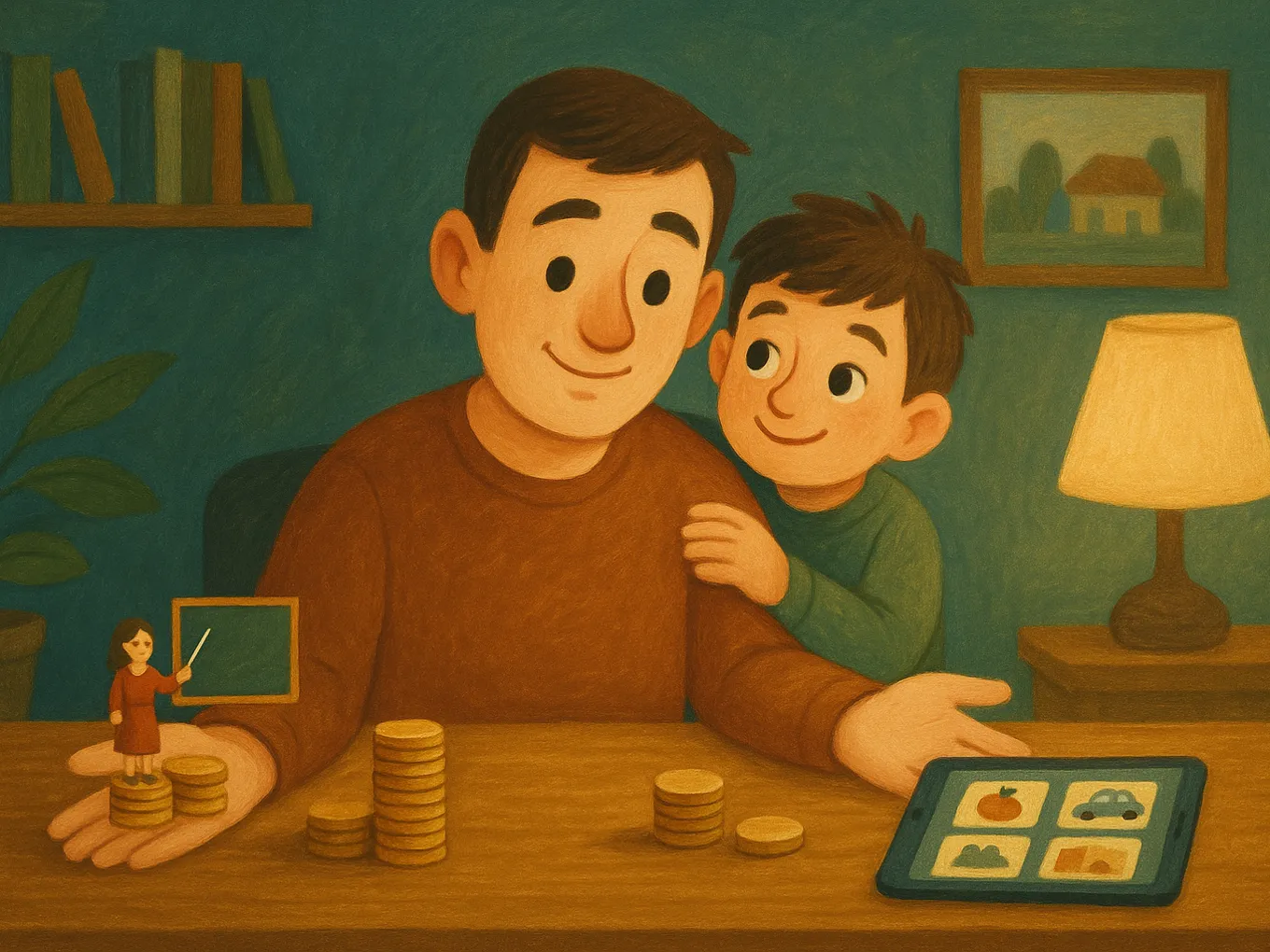
An English tutor for children is the most expensive option, and it’s worth it when there is a specific goal:
- The child has fallen behind the curriculum and would be lost in a group.
- A clear goal: a specialized school, olympiad, international exam, NMT.
- A language barrier: the child knows vocabulary and grammar but doesn’t speak — one-on-one conversation is needed.
If the goal is simply “to keep them occupied,” a group plus daily practice will give the same result for less. The plan by age is in the guide to English for children: where to start and how much to study.
How to choose a tutor: 5 steps
- State the goal in one sentence — a good teacher will tell you how many lessons it takes.
- Look where there are reviews: tutor marketplaces, recommendations from parents in the class.
- Ask about experience with children of this exact age.
- Take a trial lesson and see who talks more. The child should talk.
- Don’t buy a large package right away. Start with 4–5 lessons.
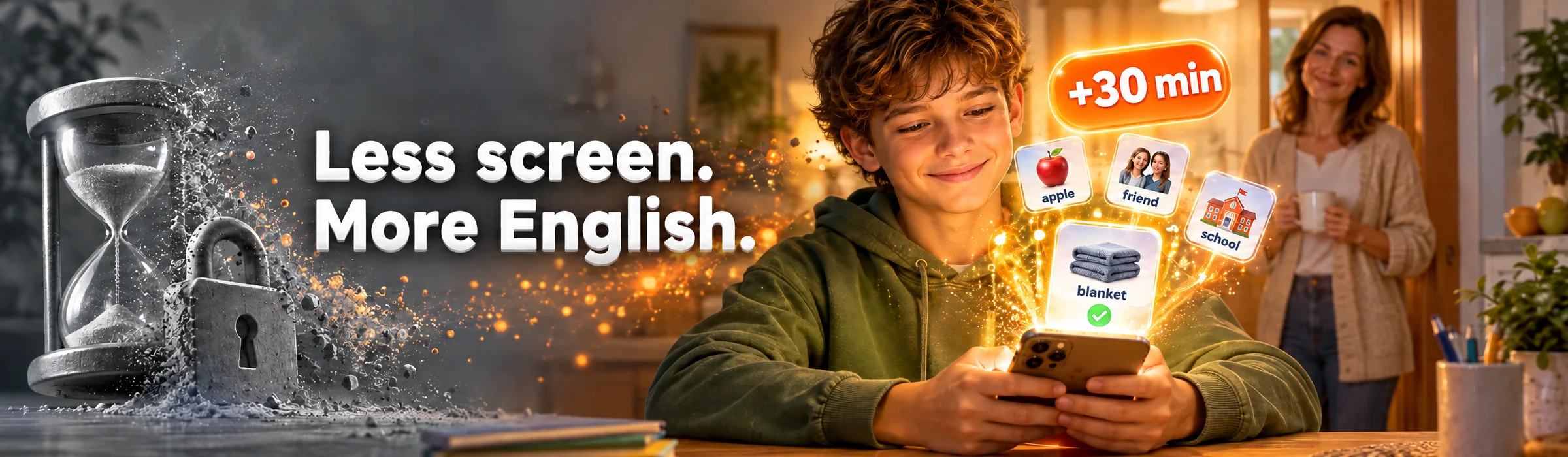
English tutoring works only as well as the child practices between lessons. The teacher gives words for the week, but who checks whether they were reviewed on Tuesday and Thursday? Usually no one: parents agree on “10 minutes a day” and forget within a week. Mova takes that part on itself: on the child’s iPhone, games, social media, and videos are locked, and they open for the minutes earned through the daily English lesson. There’s no need to remind or check — it happens automatically.
Red flags
- The lesson is 80% in Ukrainian.
- There is no program: for months, it’s just “we’ll see what they assign at school.”
- The teacher can’t say what level the child is at now or where they’re headed.
Courses and online schools: pros and cons
Group courses are cheaper than a tutor, more fun with peers, and they have a program and levels. But each child gets only 10–15 minutes of actual speaking per class, the pace is set by the group, and if you miss a lesson, you fall behind. Online schools offer individual pacing and a teacher even in a small town, but they cost like a private tutor or more, and little kids struggle in front of a screen.
The hidden drawback of all three formats is the same: there are days of silence between lessons, during which half the words are forgotten. Mova covers daily practice between classes: a lesson every day, with words coming back through spaced repetition exactly when they start to fade, so the child arrives at the lesson with vocabulary already закрепленою.

Apps: what they actually give you
Apps are the cheapest option: up to 6,000 UAH per year. They cover vocabulary, consistency, and reading with basic grammar, but they don’t provide real conversation. An overview of the options is in the article about English learning apps for children.
The biggest weakness of a regular app is that it depends on the child’s motivation: the subscription is purchased, they study for a week, and then they quit.
Mova: daily practice you can’t skip
Mova solves exactly this problem: on the child’s iPhone, games, social media, and videos are blocked by Apple’s system mechanism and open only for the minutes earned through the daily English lesson. Without a lesson, the games won’t open — and there’s no need to count or remind anyone.
- Lesson of the day: a short text with questions, new words, and one grammar rule with a test.
- Minutes for results: a “Super” test earns 30 minutes, “Good” earns 20 minutes, and all the day’s tests marked “Super” earn another +10 minutes. Parents can change or turn off the rewards.
- Words using the Leitner method: a correct answer sends the word back after 1, 3, 7, 14, and 30 days; a mistake means it comes back tomorrow.
- Level without a placement test: the difficulty adjusts to the child automatically every day.
- Parent dashboard: level, words learned, and daily results.
- Category blocking: a new game is blocked automatically, and the list changes only with the parent PIN.
What it doesn’t do: it doesn’t replace a tutor — there’s no live conversation or in-person explanation. And it works only on iPhone.
Tutor vs courses vs Mova: comparison table
| Tutor | Group courses | Online school | Mova | |
|---|---|---|---|---|
| Price, UAH/month* | 2,400 – 6,400 | 1,500 – 3,500 | 3,200 – 7,200 | Plans — at mova.family |
| How often | 1–2 times a week | 2 times a week | 1–2 times a week | Every day |
| Live conversation | Yes | Yes, 10–15 minutes per child | Yes | No |
| Who makes sure the child studies | You | You | You | The phone: without a lesson, games won’t open |
| What parents can see | From the teacher’s words | Grades, teacher feedback | Platform reports | Level, words, daily results |
Yearly math: let’s count honestly
Two scenarios for a schoolchild for a year (≈44 school weeks), lesson at an average of 500 UAH/hour.
| Scenario A: only a tutor, 2 lessons/week | Scenario B: tutor 1 lesson/week + Mova every day | |
|---|---|---|
| Lessons with a teacher | 88 × 500 UAH = 44,000 UAH | 44 × 500 UAH = 22,000 UAH |
| Daily practice | — | App subscription (market price — up to 6,000 UAH per year) |
| Total per year* | ≈ 44,000 UAH | ≈ 22,000 UAH + subscription |
| Days with English | ≈ 88 | Every day, 44 of them with a teacher |
| Between lessons | Homework, at best | Words come back exactly when they start to fade |
Even with the most expensive app subscription, scenario B is at least 16,000 cheaper and gives daily contact with the language: the child comes to the lesson with vocabulary already закрепленою, and the teacher focuses on speaking rather than repetition.
How to save money without losing quality
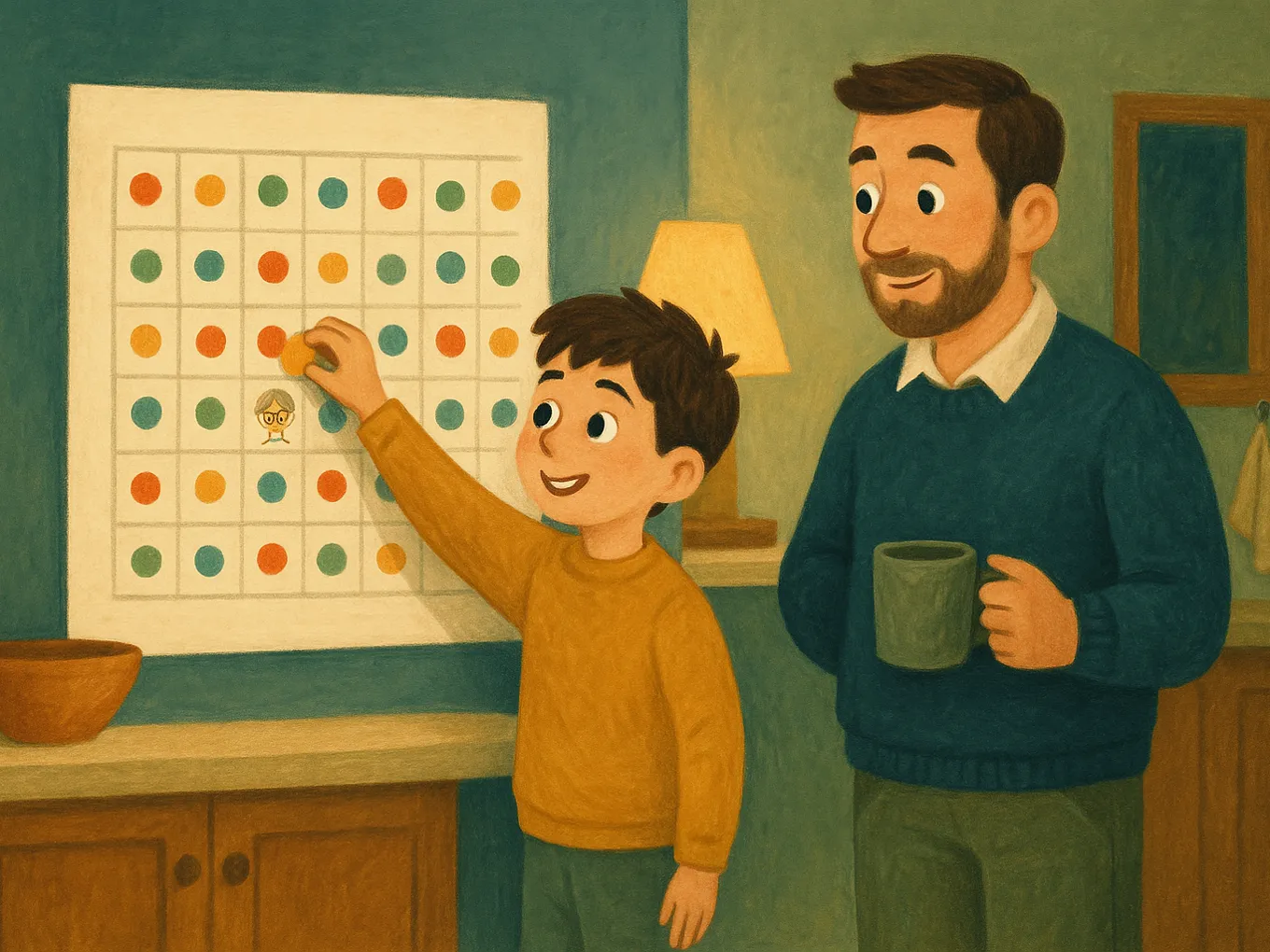
- Group instead of individual lessons when there’s no urgent goal: save 15,000–30,000 UAH a year.
- One lesson with a teacher instead of two + a daily practice tool: save about 20,000 UAH and get more practice. This is the biggest savings on the list, and Mova works best here: the daily lesson is backed by blocked games, so you’re paying for practice that actually happens.
- Online instead of offline from age 8–9: 10–20% cheaper.
- Annual payment after a trial period: in most courses and apps, the yearly rate is cheaper than monthly payments.
- Free “background”: cartoons, songs, games — see English with a child at home.
- Don’t pay for packages in advance until 4–5 lessons have passed.
When free is enough
For a preschooler aged 5–6, a child who is coping with the curriculum, or when you’re testing whether it will “click,” cartoons, songs, and free materials are enough.
If a child understands cartoons and knows hundreds of words but doesn’t speak, that’s a sign to add real practice: a group or a teacher. And if there are cartoons but the words don’t stick, the issue is lack of structure: the daily lesson in Mova with Leitner-based review adds that structure without a teacher.
Frequently asked questions
How much does an English tutor for a child cost per hour?
About 300–800 UAH (2026): a beginner — 300–450 UAH, an experienced teacher with child-focused methods — 500–800 UAH and above. Online is usually 10–20% cheaper.
Where can I find an English tutor for a child?
On tutor marketplaces with reviews and trial lessons, through parents in the class, or among school teachers. Before paying for a package, take 1–2 trial lessons.
Are there free English courses for children?
With a live teacher — almost none. There are free resources: age-based cartoons, songs, free materials, and app free tiers. Good enough to start, but not for systematic progress.
What is better for a child: an online or offline tutor?
From age 8–9, online works just as well and is cheaper. For preschoolers and grades 1–2, offline is often more effective: little kids struggle to stay focused in front of a screen.
At what age does a child need an English tutor?
Roughly from age 7–8, when there is a specific goal: catch up on the program, prepare for an exam, get the child speaking. Before that, play-based classes, cartoons, and short daily activities are enough.
Can a child learn English with just an app?
An app covers vocabulary, reading, and regularity, but it doesn’t replace real conversation. A realistic setup: a daily practice tool like Mova plus speaking with a tutor, in a group, or with parents once a week.
Want English to keep going between lessons with a tutor on its own? Try Mova: a daily lesson, minutes for games are credited automatically, and you don’t have to count or remind anyone.
Also read: