
Clip Thinking and “Dopamine Addiction”: Why Your Child Can’t Tear Themselves Away from the Screen
A child is not “weak-willed”: short-video feeds are designed to hold attention, and the unpredictable reward with every swipe beats any self-control, even in adults. “Clip thinking” and “dopamine addiction” are not diagnoses, but popular names for this effect. You can bring back concentration without a war or a “week without a phone” — with the rule “effort first, screen later.”

Roman Shkabko · 9 min read
What clip thinking really is
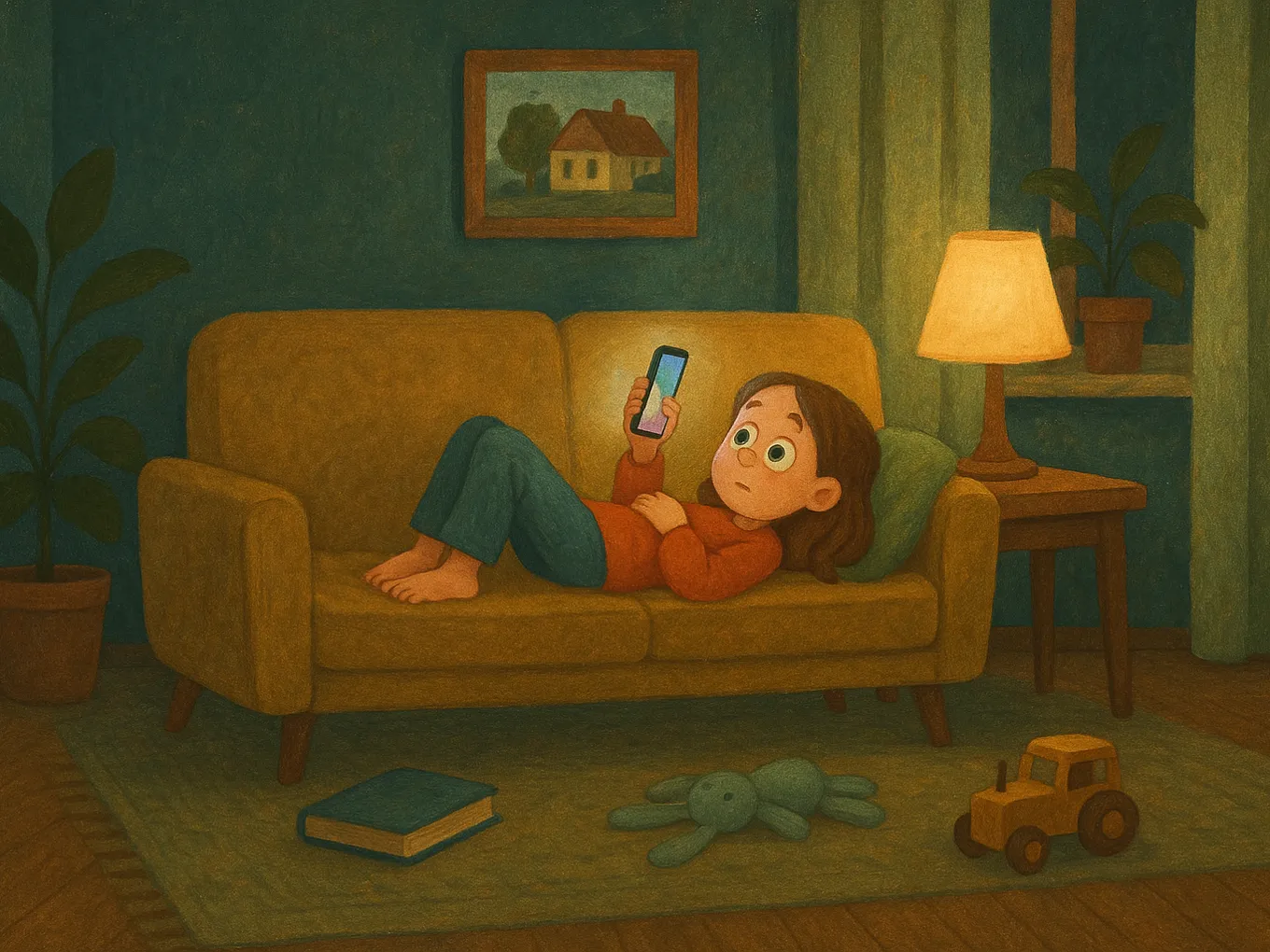
Clip thinking is not a clinical term; it does not exist in medical classifications. It’s a casual name for the habit of taking in information in short fragments: a 15-second video, a meme, the next video.
- Reality: attention adapts to its “diet.” After 15–60-second clips, a textbook paragraph feels unbearably slow.
- Reality: frequent switching is exhausting, and returning to an interrupted task costs time and effort every time.
- Exaggeration: “this generation is physically unable to read” and “the brain changes irreversibly.” No one has proven irreversibility: children who get back a routine and longer activities also get their concentration back.

“Dopamine addiction”: what’s true and what’s marketing
Dopamine is not a “happiness hormone,” but a neurotransmitter of reward anticipation: it becomes more active when “something interesting might happen right now.” That’s why your hand reaches for refresh automatically.
Infinite scrolling is a small lottery: the next video may be boring, or it may be hilarious. The same mechanism powers slot machines, and a child’s self-control is still immature.
And “dopamine addiction” does not exist as a diagnosis, and there is no need to “lower dopamine”: without it, there is no motivation for either learning or sports. The real problem is simpler: a child’s environment is overloaded with easy, quick rewards, and against that backdrop any effort loses. What needs fixing is not “dopamine,” but the balance between effort and reward. In Mova, for example, that balance is built into the phone itself: first an English lesson, then the screen they’ve earned.
How it looks in a child: specific signs
Look for stable patterns, not one long evening:
- scrolls the feed “on autopilot” and can’t tell you what they were watching 10 minutes ago;
- “just 5 more minutes” reliably turns into an hour;
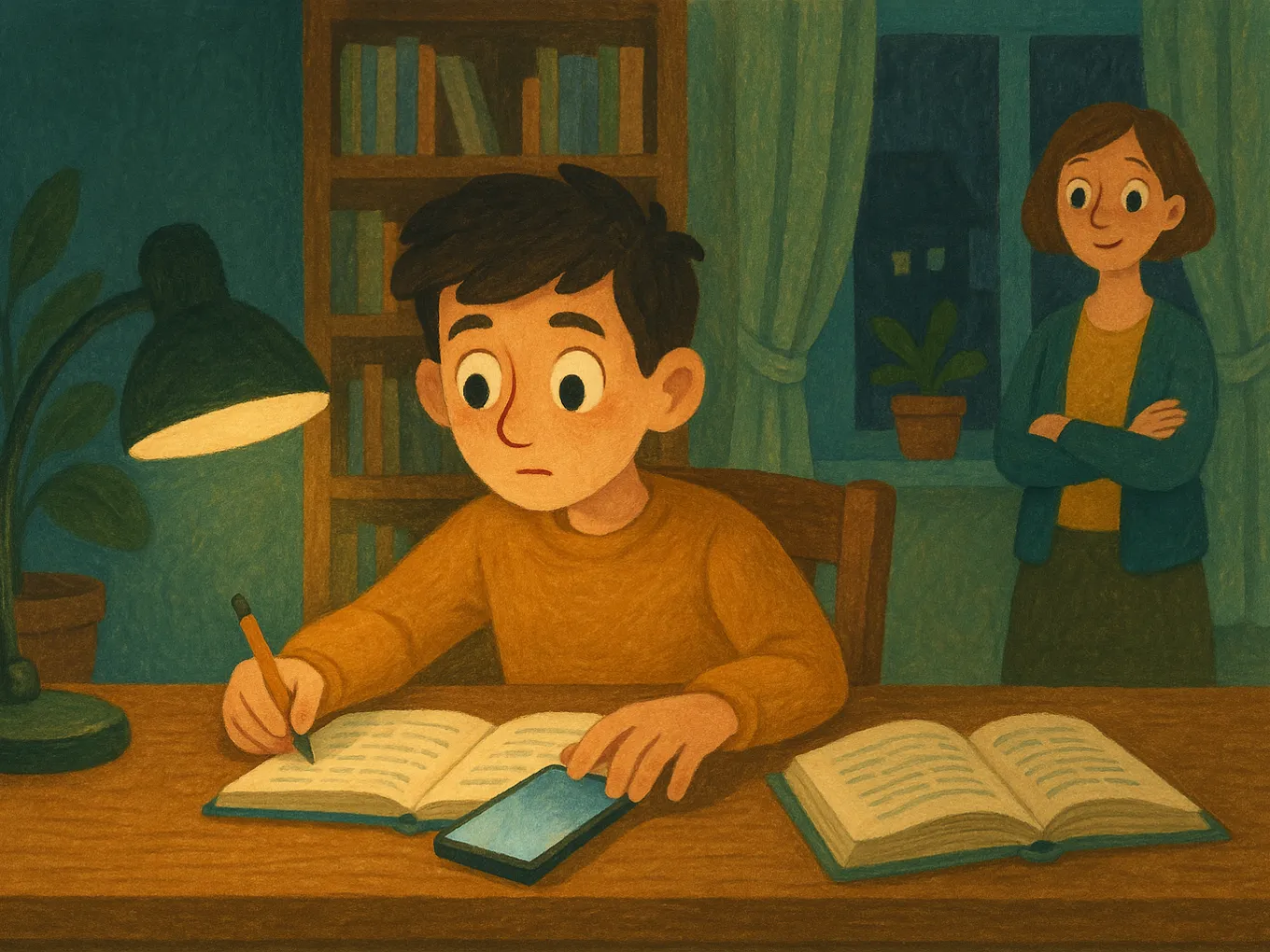
- homework that should take 20 minutes stretches into 2 hours because of phone checks;
- books, building sets, board games are now “boring”;
- without the phone, they’re irritable and don’t know what to do with themselves even for 15 minutes;
- the first thing in the morning and the last thing at night is a screen.
If you recognized 3–4 points, it’s time to change the rules. A plan without scandals — how to wean a child off the phone.
Digital detox: why a “week without a phone” doesn’t heal, and what works instead
A radical detox almost always fails:
- it’s temporary — the child waits out the punishment, and then everything slides back within an hour;
- it punishes instead of trains — resentment replaces habit;
- it hits legitimate needs — friends, school chats, music, and the phone becomes even more valuable.
What you need is not a one-week punishment, but a rule that works every day and doesn’t depend on your vigilance. That’s exactly what Mova solves: the phone stays with the child, and entertainment simply waits its turn after the lesson.
What works are consistent rules:
- Gradual narrowing. If it was 5 hours, set 3; in a week or two, 2. Benchmarks are how much time a child can spend on the phone.
- Screen-free zones instead of “screen-free days.” Meals, homework, and the hour before bed — no gadgets, every day, for everyone. For evenings — phone at night: how to remove the gadget before sleep.
- The “first, then” order. Screen entertainment becomes the result of a task completed. Not deprivation, but sequence.
- Technical reinforcement. A rule spoken aloud loses to the feed, and a “homework first” agreement or a tally chart on the fridge is something nobody keeps up with after a week. The limit in Screen Time holds the boundary, but it doesn’t know about sequence. That’s why the most reliable option is Mova: games, social media, and videos are blocked, and the child earns minutes with daily English lessons. You don’t have to count or remind anything, and the rule doesn’t weaken in the second week the way agreements do.
Mova: “effort first — screen later” every day, without arguments
Games, social media, and videos on the child’s iPhone are blocked by Apple’s system and open for the minutes they earn with a daily English lesson. What lasts a week in manual mode happens on its own here: a lesson every day, minutes are credited automatically, and the screen opens only for what’s been earned.
- The reward is predictable and earned. A test on “Super” gives 30 minutes, on “Good” — 20, and all the day’s tests on “Super” — another +10. Reward anticipation works for effort. Rewards can be changed or turned off.
- The lesson trains attention. Read & Write: text (read or listen to it) and questions about it. Words & Grammar: 6 words and a rule, then a short test.
- It’s manageable, so children don’t quit. There’s no placement test: the level adjusts to the result, and words come back in spaced repetition (the Leitner method) until they’re learned.
- No loopholes. A new game closes automatically, and the list of blocked items can only be changed with the parent PIN.
- Progress is visible. Parents can see lesson results and the child’s level in the web dashboard.
- No “just 5 more minutes.” Neither the child nor you can add minutes manually — even when you’re tired and want to give in. The balance is topped up only by lessons and bonuses, so “one more video” runs into zero, not your willpower.
- If it doesn’t work, there’s a second chance. A retake opens after one hour, with different questions.
- You don’t need to sit beside them. If the lesson isn’t completed, games and videos won’t open.
What it doesn’t do: it does not replace sleep, movement, or real-life socializing — and it does not treat causes that require a specialist (see below). It works only on iPhone.
Practical plan: how to restore the ability to concentrate for long periods
Concentration is trained like endurance — with short, regular sessions:
| Tool | What it trains | How to implement it |
|---|---|---|
| Reading aloud or independently | Holding a long context | 10–15 minutes every day at the same time; start with short stories and comics |
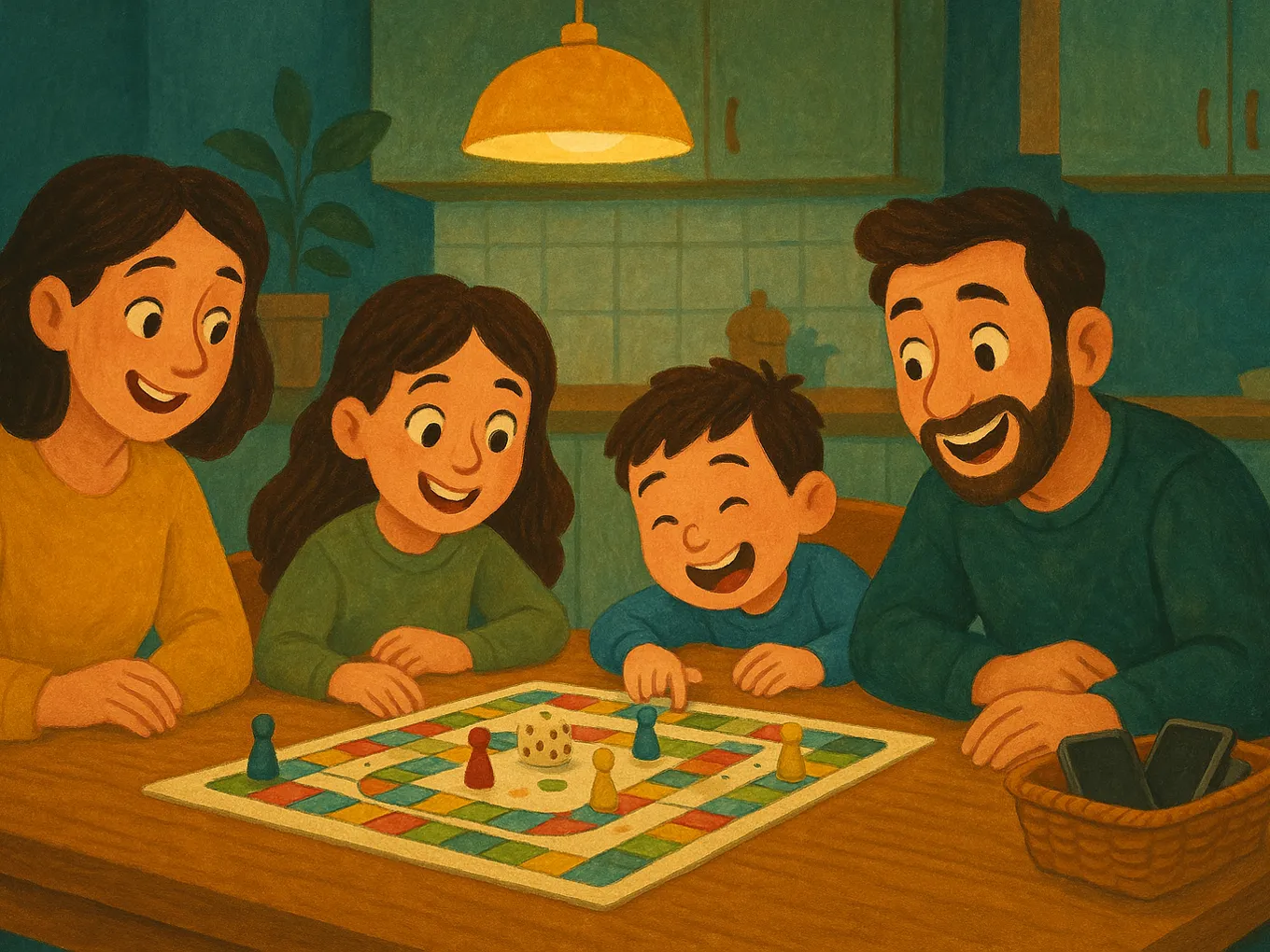
| Board games | Waiting for your turn, strategy, losing without a tantrum | 1–2 family games a week — the direct opposite of swiping |
| A daily lesson before screen time | The “effort → result” habit | What matters is daily consistency. In Mova, the lesson is the key to the screen, so skipping it is not in the child’s interest |
| Sports, 60 minutes of movement a day | Release and sleep; the AAP recommendation for school-age children | A class 2–3 times a week plus walks |
| Boredom without screen rescue | The ability to keep yourself occupied | Don’t fill every pause with a gadget |
Ideas for the freed-up time — how to keep a schoolchild busy instead of using a phone. And the foundation: 9–12 hours of sleep — a child who is short on sleep cannot concentrate for long.
When to worry and see a specialist
Contact a child psychologist if:
- the child systematically loses sleep because of the phone, and the rules have not changed that;
- they’ve abandoned friends, clubs, and everything they used to love;
- grades have dropped sharply rather than gradually;
- limits trigger aggression, panic, or complete apathy;
- the feed looks like an escape: from bullying, anxiety, or conflict at home.
Then the phone is not the cause but the painkiller, and taking it away without help can make things worse.
Frequently asked questions
What is clip thinking in simple words?
The habit of taking in information in short fragments: a 15-second video, a meme, the next video. It’s not a diagnosis, but a trained attention pattern: against that backdrop, a textbook paragraph or a book seems unbearably boring.
Does phone dopamine addiction really exist?
As a diagnosis — no. Dopamine is a normal motivation neurotransmitter. The problem is that feeds with infinite scroll are built on unpredictable rewards, and it’s hard to pull away from them even for adults.
Does digital detox help a child?
A sudden “week without a phone” usually leads to conflict and a rebound immediately after. What works are consistent rules: stable limits, gadget-free zones (sleep, meals, homework), and the principle “task first — screen later.”
How long does it take for a child to concentrate again?
There’s no universal number: the habit of effort is trained through regular short sessions, and parents usually notice the first changes after a few weeks. The hardest part is consistency; in Mova, the phone itself supports it: games and videos open only after an English lesson.
Can a child watch short videos at all?
Yes — within the daily limit and not at the start of the day or before bed. Problems begin when short videos push out sleep, movement, learning, and real-life communication.
When do you need a specialist, not just a routine?
If a child is systematically not sleeping, has dropped friends and hobbies, grades have fallen sharply, and limits trigger aggression or panic — contact a child psychologist. Rules don’t remove the reason the child is escaping into the screen.
Want “effort first — screen later” to hold on its own, without daily arguments? Try Mova for free.
Also read:
- Lessons with a phone in hand: how to remove distractions without taking the phone away
- How to teach a child to study independently: the 15-minute-a-day habit
- How to keep a schoolchild busy instead of using a phone: after school and in summer
- Phone at night: how to remove the gadget before sleep without a fight
- Parental control: Screen Time vs Family Link vs Mova — which to choose