Present Perfect in Simple Terms
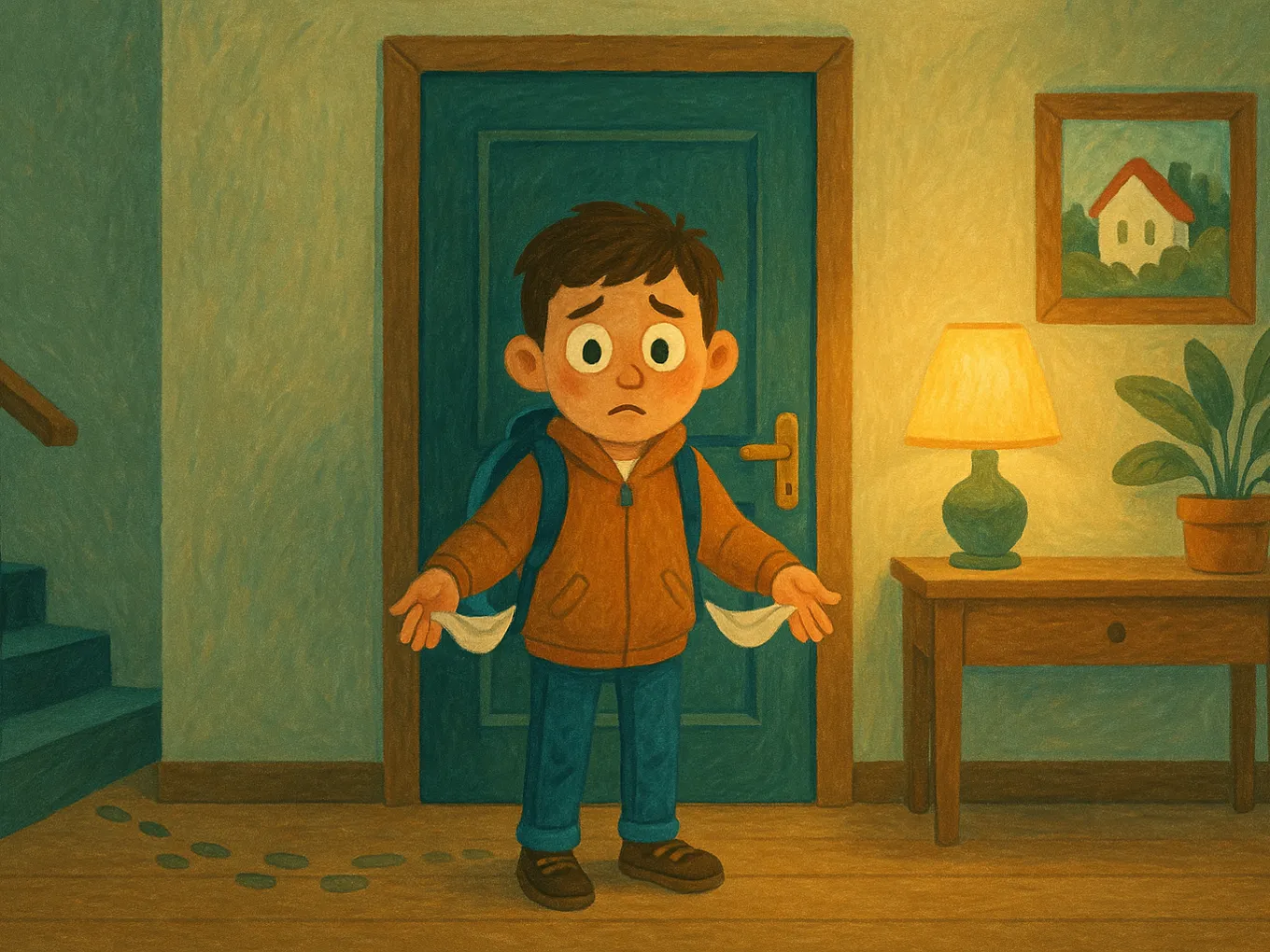
Present Perfect is the tense for an action that has already happened, but its result matters now. Formula: have/has + V3. I have lost my keys — I’ve lost my keys and right now I can’t open the door.

Roman Shkabko · 9 min read
How Present Perfect is formed
Have or has plus the third form of the verb (V3). Has is used only with he/she/it, like the -s in Present Simple.
| Subject | Formula | Example | Contraction |
|---|---|---|---|
| I / you / we / they | have + V3 | I have finished my homework. | I've finished… |
| he / she / it | has + V3 | He has broken the cup. | He's broken… |
With regular verbs, V3 is just -ed: play → played. Irregular verbs need to be learned: go → gone, see → seen, eat → eaten. How to learn them without rote memorization — in the article about irregular verbs with the full table.
The main idea: “the past with a result now”
What matters is not “when,” but “what we have now.”
- I have lost my keys. — I don’t have the keys NOW; I’m standing at the door.
- I lost my keys yesterday. — Just a fact. Maybe I’ve already found them.
If you see yesterday, last week, or in 2020, that’s already Past Simple.
When we use it: 4 typical cases
1. Experience (ever, never)
- Have you ever been to London?
- She has never tried sushi.
2. Result (just, already, yet)
- I have just finished my lesson.
- He has already done his homework. — He’s finished already, so he can go out and play.
- They haven't arrived yet. — They still haven’t arrived.
3. A period that is still continuing (for, since)
- We have lived here for ten years. — We’ve lived here for ten years (and still do).
- I have known her since 2020.
4. News and recent events
The news is announced in Present Perfect; the details are told in Past Simple.
- Mum, I have passed the test! — the news. It was easy. — the details.
- Scientists have discovered a new planet. — a typical headline.
Signal words for Present Perfect
| Signal word | Meaning | Position in the sentence | Example |
|---|---|---|---|
| just | just | between have/has and V3 | I have just eaten. |
| already | already | between have/has and V3 | She has already left. |
| yet | yet / already (in questions) | at the end of negatives and questions | He hasn't called yet. |
| ever | ever | in questions, before V3 | Have you ever flown? |
| never | never | between have/has and V3 | I have never seen it. |
| for | for (a period of time) | before the period, at the end | …lived here for five years. |
| since | since (a point in time) | before the starting point, at the end | …worked there since May. |
| recently / lately | recently / lately | usually at the end | I have read a lot lately. |
Negatives and questions
- Negative: haven't, hasn't. I haven't finished. She hasn't called.
- Question: have/has moves to the front. Have you done your homework? Has he arrived?
- About experience: Have you ever ridden a horse? — Yes, I have. / No, I haven't.

Present Perfect vs Past Simple: the main confusion
In Ukrainian, both can be translated the same way as “I lost,” which is why this is the most common mistake.
| Feature | Present Perfect | Past Simple |
|---|---|---|
| What matters | the result now | the fact itself in the past |
| Time of the action | not stated | often stated: yesterday, in 2020, ago |
| Example | I have lost my keys. (I’m still looking for them) | I lost my keys yesterday. (just telling the story) |
| The question “when?” | not possible | When did you lose them? |
A simple way to choose:
- Is there a specific past time (yesterday, ago, last…, in 2015, when?) → Past Simple.
- Do you see just, already, yet, ever, never, for, since → Present Perfect.
- No signal words: if the result is visible now → Present Perfect; if it’s simply a story about the past → Past Simple.
Present Perfect vs Present Perfect Continuous
Continuous (have/has been + V-ing) focuses on the process; Perfect focuses on the result: I have read the book (I’ve finished it) and I have been reading the book for two hours (I’ve been reading it for two hours already).
How to explain Present Perfect to a child
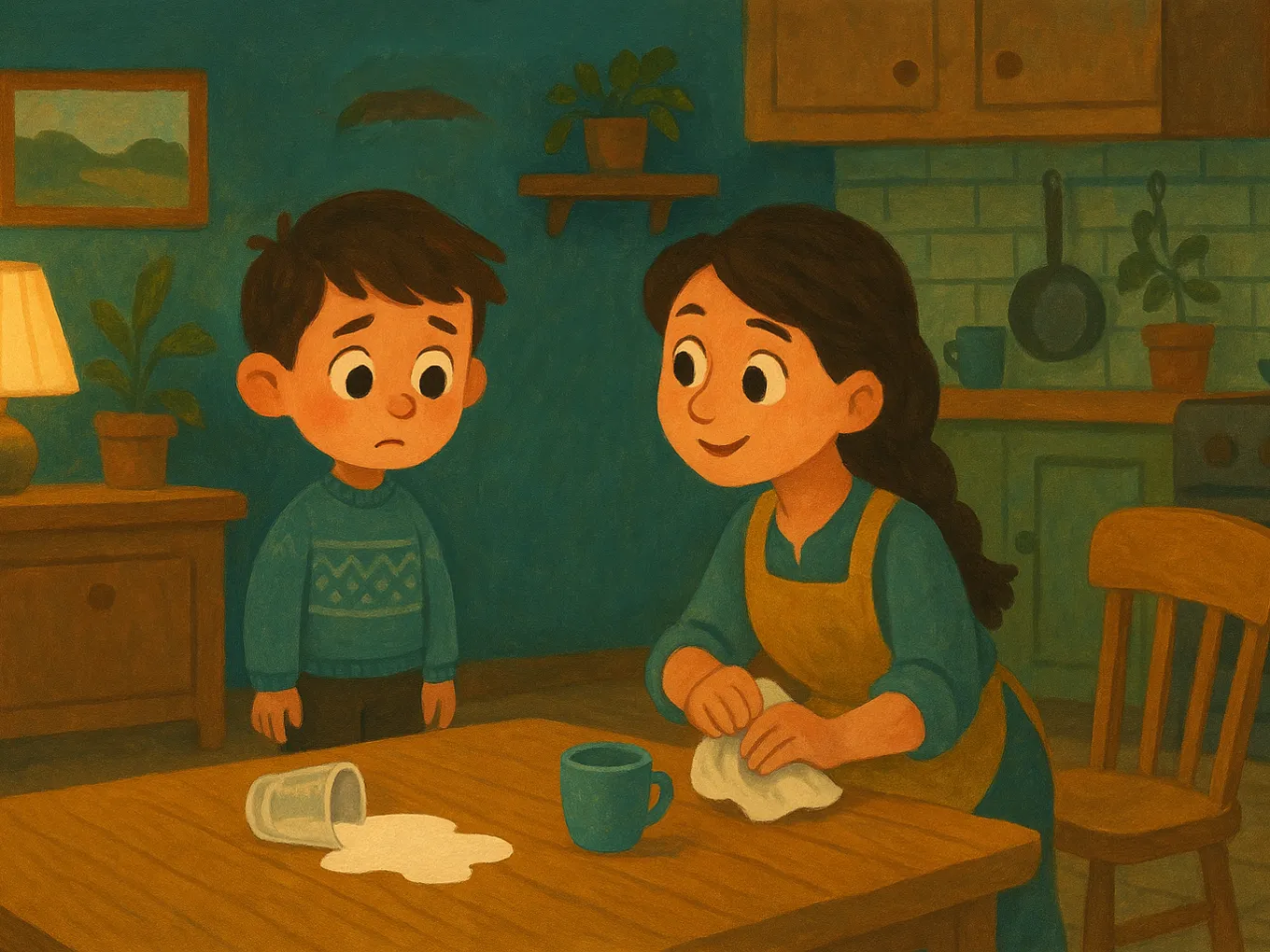
Use the idea of “a trace left by the action”: the action is over, but the trace is visible now. A child knocks over a glass — the milk spilled a minute ago, but the puddle is still there. I have spilt the milk. And in the evening, when the table was wiped long ago, it becomes I spilt the milk at lunch, Past Simple.
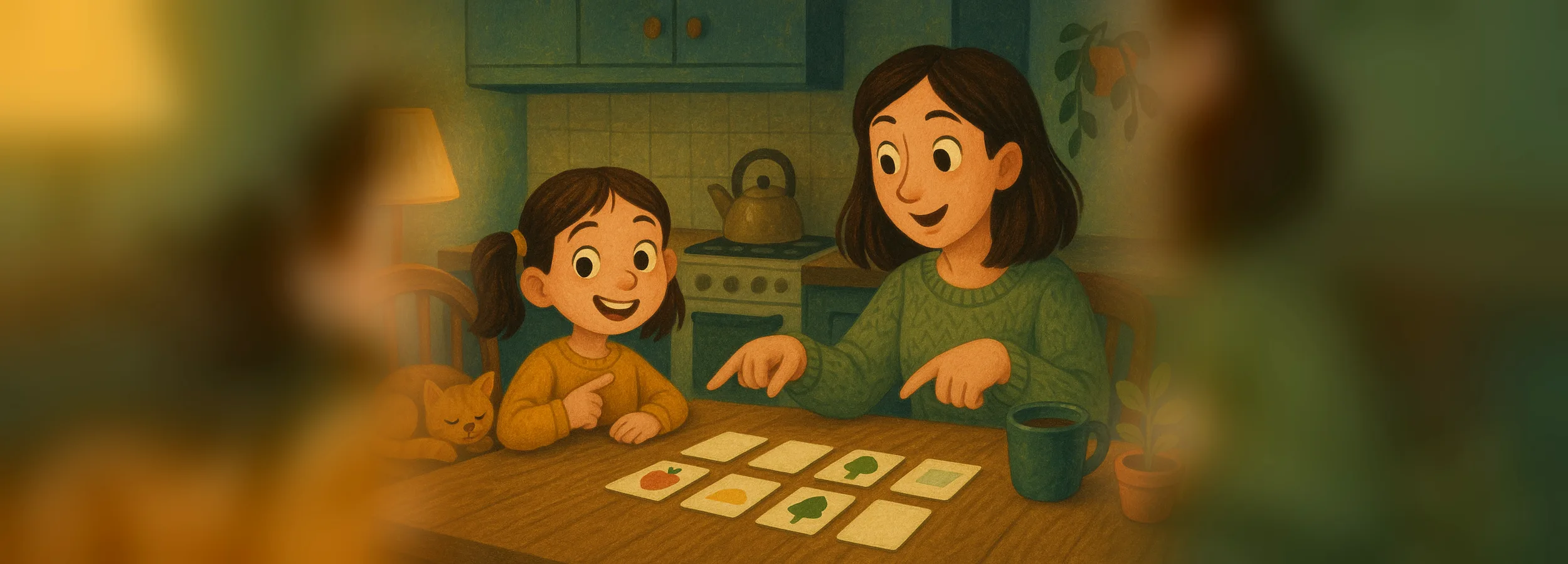
Try the game “spot the trace”: you say a sentence, and the child says whether there is a trace visible now. I have washed my hands — yes, there is. I washed my hands yesterday — that’s just a story.
The explanation will stick better if the child already knows the third form of verbs. Flashcards made by hand usually end up in a drawer after a week: no one goes through them every day. In Mova, for example, review happens automatically: a word the child gets right comes back after 1, 3, 7, 14, 30 days, and a word with a mistake comes back as soon as tomorrow.
How Mova gets a child to Present Perfect
- Step by step. No placement test: the level adjusts every day, from to be for younger children to Present Perfect for teens.
- Rule of the day. In Words & Grammar there are 6 words and 1 rule, followed by a short test. If the child doesn’t pass, there’s another attempt in an hour with different questions.
- Vocabulary up to B1 level. From the Oxford 3000 list; a correct answer means the word returns after 1, 3, 7, 14, 30 days, a mistake means tomorrow.
- A text with questions. Read & Write offers a text and questions, with answers by text or voice.
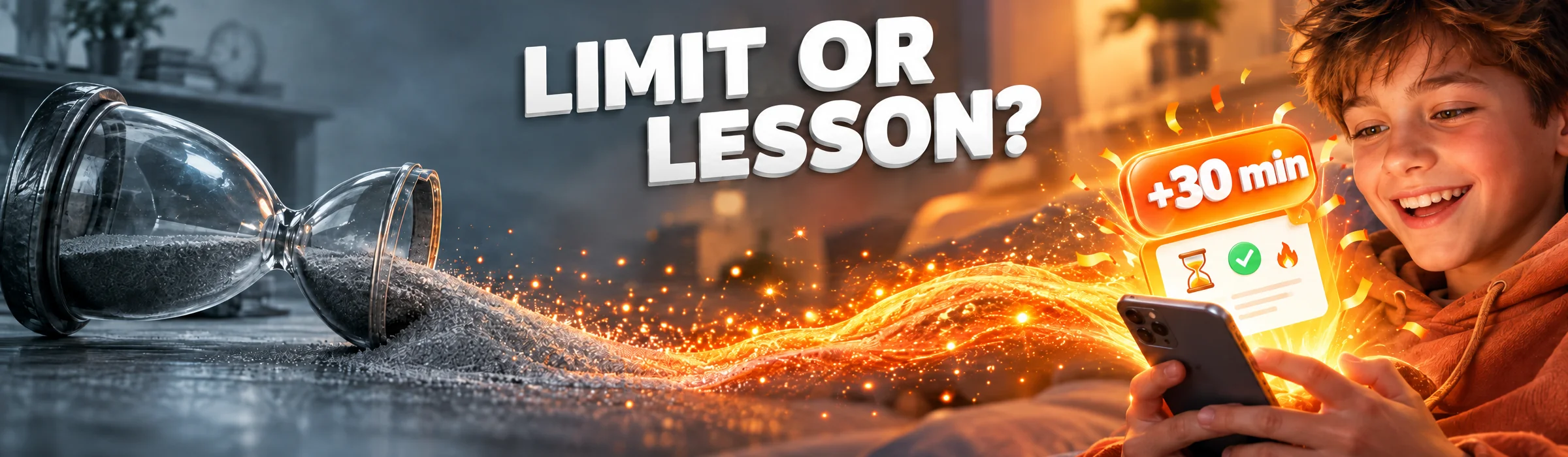
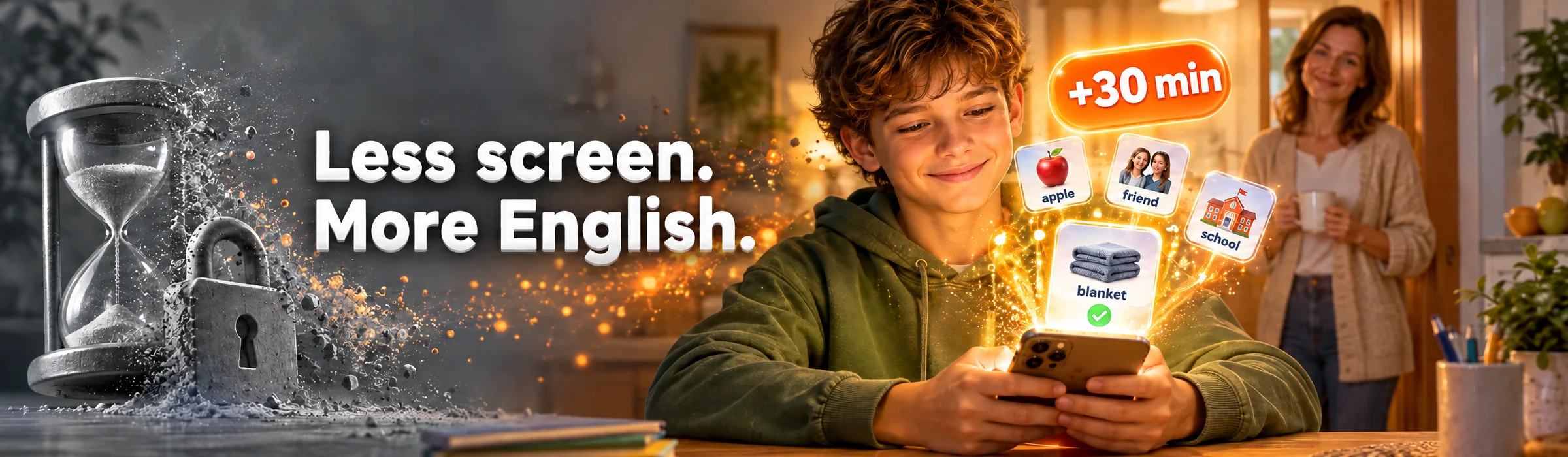
- No reminders needed. Games, social media, and videos on the child’s iPhone are blocked and open only for minutes earned through lessons: a test passed with “Excellent” gives 30 minutes, “Good” gives 20, and all tests of the day passed with “Excellent” add another +10. You don’t have to count anything or keep reminding them to “go do grammar,” and in the web dashboard you can see the level (“about grade N”) and each day’s result.
10 exercises with answers
Put the verb into Present Perfect or Past Simple.
- I ___ (lose) my phone — can you call it, please?
- She ___ (visit) London in 2023.
- We ___ (not / finish) the project yet.
- ___ you ever ___ (eat) pizza with pineapple?
- He ___ (break) his leg last winter.
- They ___ (live) in Kyiv since 2019.
- Look! Somebody ___ (paint) the fence — it's green now.
- When ___ you ___ (buy) this bike?
- I ___ (just / see) our teacher in the park.
- My sister ___ (never / try) snowboarding.
Show answers
- have lost — the result matters now: the phone is missing.
- visited — a specific year (in 2023) → Past Simple.
- haven't finished — the signal word yet.
- Have you ever eaten — a question about experience.
- broke — last winter → Past Simple.
- have lived — since 2019, the period is still continuing.
- has painted — the result is visible now (the fence is green).
- did you buy — the question When? → Past Simple.
- have just seen — the signal word just.
- has never tried — never + third person singular.
Ten exercises will reinforce the rule for one evening, but after a week without practice, have/has + V3 gets mixed up with Past Simple again. No one checks printed worksheets every day, so it’s most reliable to hand daily practice over to Mova: every day your child gets a new lesson matched to their level, with one rule and a short test, and game time is awarded automatically based on the result. If it doesn’t go well, there’s another attempt in an hour with different questions instead of waiting until next week.
Preparing for exams? See the daily practice plan for the NMT English test.
Frequently asked questions
How do you explain Present Perfect to a child?
Through the idea of “a trace left by the action”: the action is over, but the trace is visible now. Spilled milk on the table — I have spilt the milk. If the trace is visible, use Present Perfect; if it’s just a story about the past, use Past Simple.
What’s the difference between Present Perfect and Past Simple?
Past Simple is a fact in the past, often with “when”: I lost my keys yesterday. Present Perfect is a result now, with no time stated: I have lost my keys. If you have yesterday, last week, in 2020, or ago, that’s Past Simple.
What is V3 and where do you get the third form of the verb?
V3 is the Past Participle. For regular verbs, it ends in -ed (played, watched); for irregular verbs, you learn it from a table: go — went — gone, see — saw — seen, do — did — done.
What’s the difference between for and since in Present Perfect?
For means duration: for two years. Since means a starting point: since 2023, since Monday. If you can ask “how long?” — use for; if you can ask “since when?” — use since.
From what grade should a child learn Present Perfect?
Once Present Simple and Past Simple are already solid — usually in middle school. In Mova, the level adjusts every day without a placement test, and Present Perfect appears for teens when the simpler rules are already mastered.
Want your child to practise have/has + V3 every day, without a last-minute cram session before a test? Try Mova for free.
Read also: